

Logo
WhatsAppFacebookYouTube

Latest Articles

Discover insights, tutorials, and stories from our community of writers and experts.

What Is the Deflection Limit for Gypsum Board?

What Is the Deflection Limit for Gypsum Board?

Mar 23, 2026
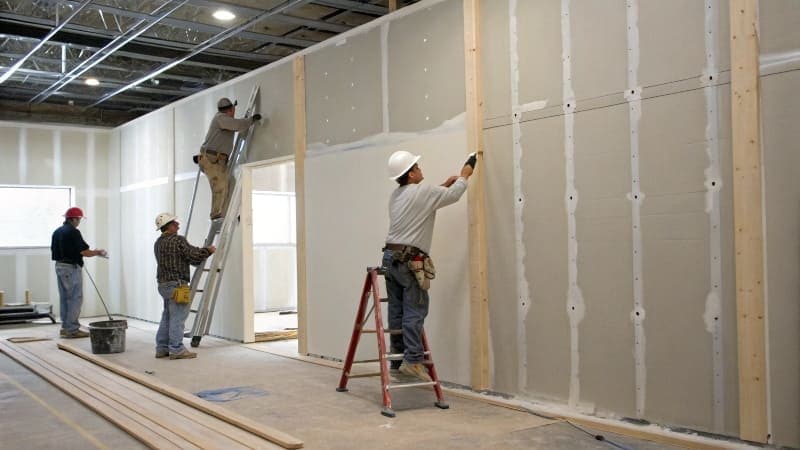
The typical deflection limit for gypsum board is L/240 to L/360, depending on whether it’s used for walls or ceilings. “L” represents the span between support points. TRUSUS insight: deflection defines how a board behaves as a structure, not just how it decorates. This small numerical limit ensures the board stays flat, joints don’t crack, […]
Should You Use Moisture-Resistant Drywall in a Basement?

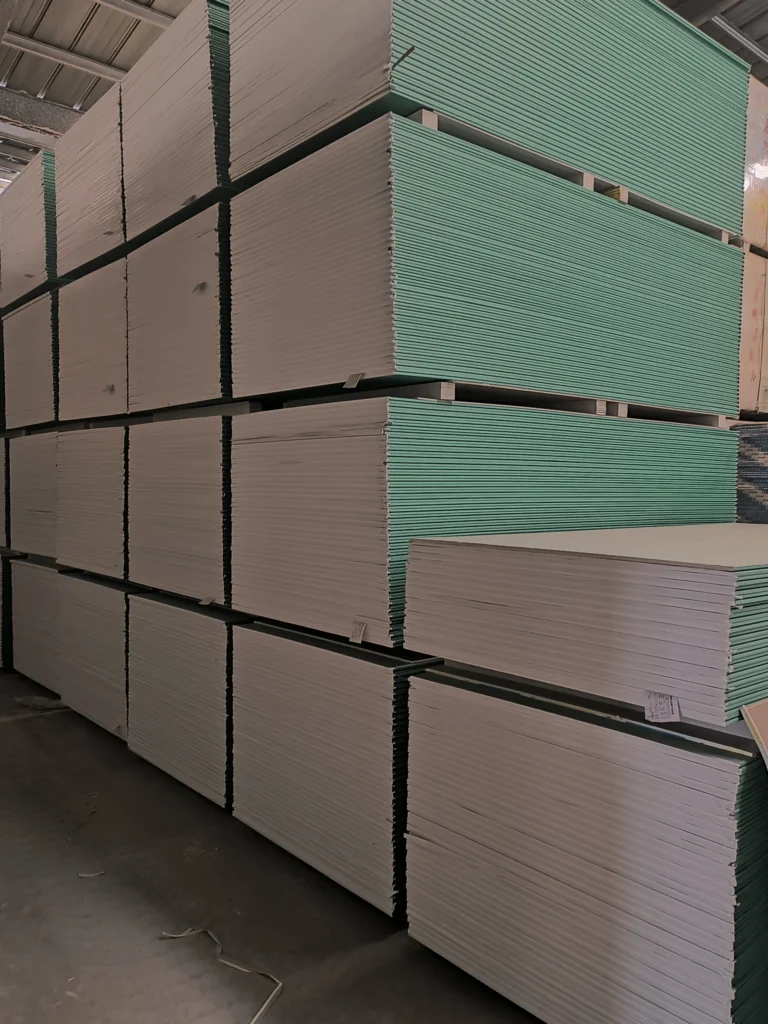
Should You Use Moisture-Resistant Drywall in a Basement?

Mar 20, 2026
Yes, you should use moisture-resistant drywall in basements, especially along exterior walls or damp zones. It reduces mold risk and prolongs wall life under humid conditions. TRUSUS insight: moisture resistance isn’t waterproofing—it’s part of an environmental control system. Moisture-resistant drywall slows humidity transfer and protects core integrity, but it works properly only when paired with […]
What Are Common Drywall Mudding Mistakes?

What Are Common Drywall Mudding Mistakes?

Mar 19, 2026
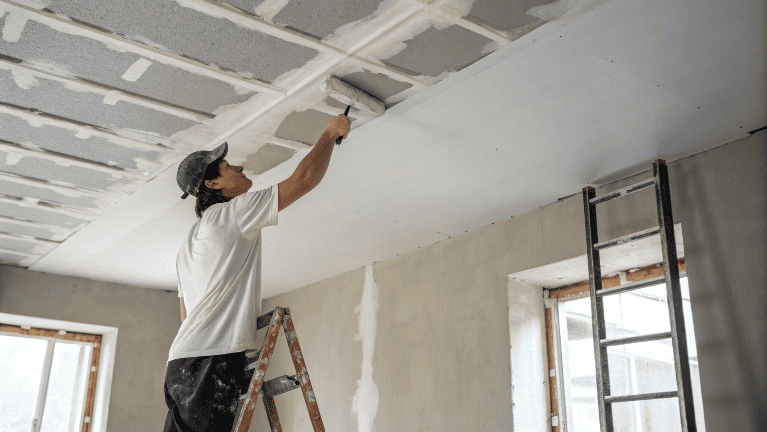
The most common drywall mudding mistakes are applying too much mud, skipping reinforcement tape, and poor sanding technique that leaves visible ridges after painting. TRUSUS insight: smooth walls come from system awareness, not just hand skill. Too much mud shrinks during drying and cracks. Unequal layering or missed tape weakens joints. Real quality comes from […]
Why Is Moisture-Resistant Gypsum Board Tapered?

Why Is Moisture-Resistant Gypsum Board Tapered?

Mar 18, 2026
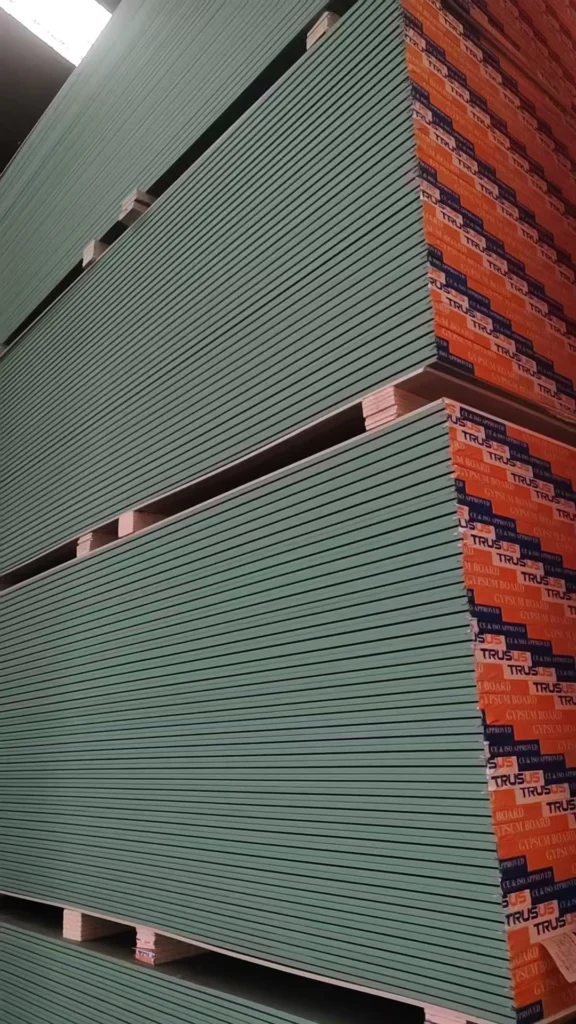
Moisture-resistant gypsum board is tapered so that joints can be filled and covered evenly with joint compound and tape. This design helps create a smooth finish without bumps or cracks. TRUSUS insight: what looks like a small edge detail is actually a system-level accuracy feature. Tapering gives installers space to hide seams while maintaining a […]
What Is the Difference Between Baked-Paint and Galvanized T-Grids?

What Is the Difference Between Baked-Paint and Galvanized T-Grids?

Mar 17, 2026
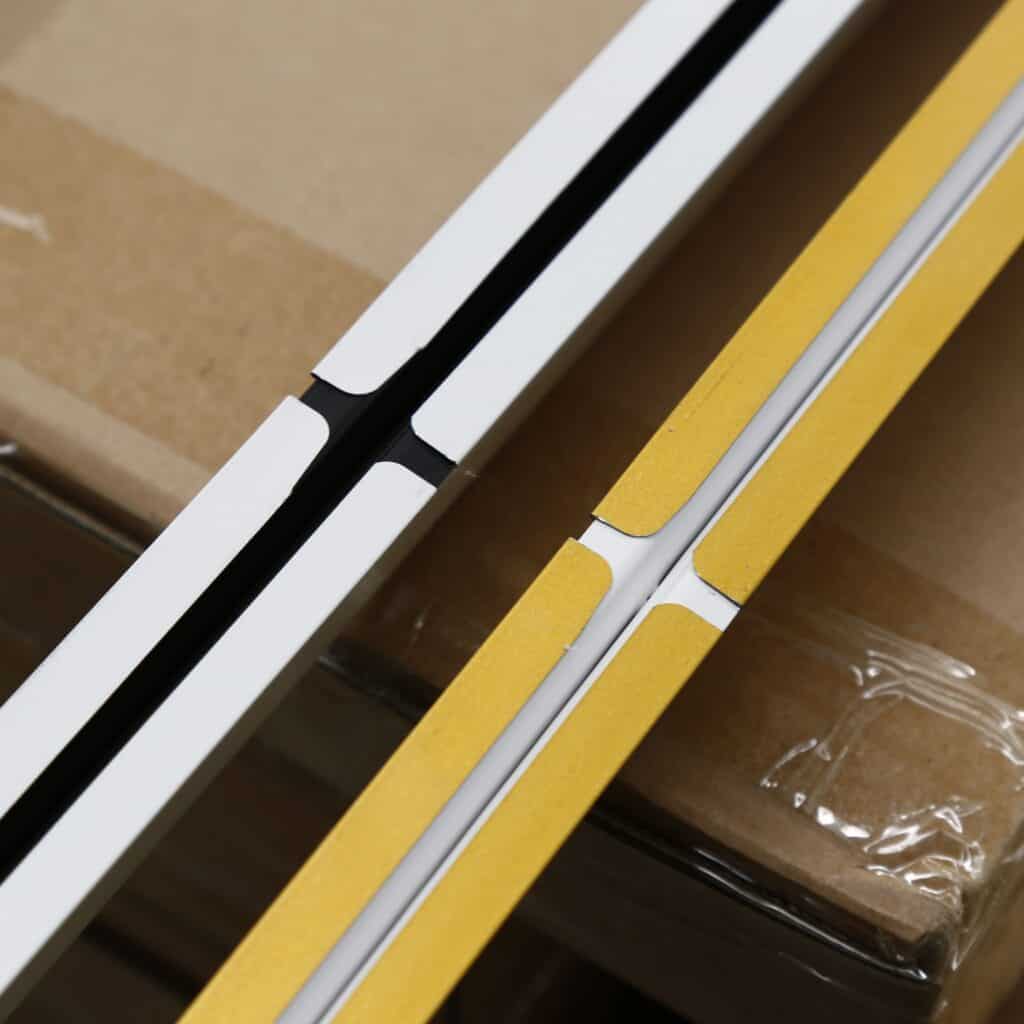
Baked-paint T-grids are coated with a hardened paint finish that gives them a glossy, decorative surface, while galvanized T-grids use a zinc coating that protects against corrosion and rust. The difference lies in application control—paint for aesthetics, zinc for durability. TRUSUS insight: surface beauty lasts years; internal protection lasts decades. Baked-paint T-grids are perfect for […]
How Do You Know if You Have Termite Damage in Drywall?

How Do You Know if You Have Termite Damage in Drywall?

Mar 16, 2026
You can identify termite damage in drywall by soft spots, bubbling paint, small holes, and hollow tapping sounds. These signs usually appear when termites travel behind paper layers or wooden studs connected to the gypsum panel. insight: damage hides inside walls long before you can see it. Termites prefer dark, moist, protected areas, and drywall’s […]
What Is 9mm Gypsum Board Used For?

What Is 9mm Gypsum Board Used For?

Mar 13, 2026
9mm gypsum board is mainly used for ceilings and light non-load-bearing partitions. It offers flexibility, easy installation, and reduced structural loading, making it ideal for residential and commercial ceiling systems where weight and precision matter more than thickness. TRUSUS insight: thickness shows structure design, not product quality. 9mm board supports ceiling systems by reducing frame […]
How to Check Gypsum Board Quality?

How to Check Gypsum Board Quality?

Mar 12, 2026
To check gypsum board quality, test its core density, paper bonding, water resistance, and fire performance. A good board remains flat, strong, and dimensionally stable under moisture or heat. Visual smoothness alone does not represent quality—structural integrity does. insight: a smooth surface shows beauty; a strong core shows quality. Reliable gypsum boards combine balanced density, […]
T-Grid Ceiling vs. Plasterboard Ceiling: Which Is Easier to Maintain?

T-Grid Ceiling vs. Plasterboard Ceiling: Which Is Easier to Maintain?

Mar 11, 2026
T-grid ceilings are easier to maintain. Each ceiling tile can be lifted or replaced independently, giving full access to wiring and mechanical systems above. Plasterboard ceilings are continuous surfaces, requiring cutting and refinishing for any repair access. insight: maintenance ease comes from flexibility, not appearance. Ease of maintenance should match the space’s functional needs and […]
Previous 1 2 3 4 ... 17 Next

Copyright 2002 - 2026 Trusus | All Rights Reserved | Powered by Trusus