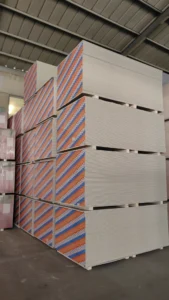


To check gypsum board quality, test its core density, paper bonding, water resistance, and fire performance. A good board remains flat, strong, and dimensionally stable under moisture or heat. Visual smoothness alone does not represent quality—structural integrity does.
insight: a smooth surface shows beauty; a strong core shows quality.

Reliable gypsum boards combine balanced density, dry strength, and certified moisture resistance.
What Are the Four Types of Gypsum Board?
Gypsum boards come in four standard types: standard board, moisture-resistant board, fire-resistant board, and acoustic/high-strength board. Each type fits specific environments—dry walls, wet areas, fire zones, and sound-insulated spaces. Performance matching matters more than thickness or color.
product insight: application defines quality.
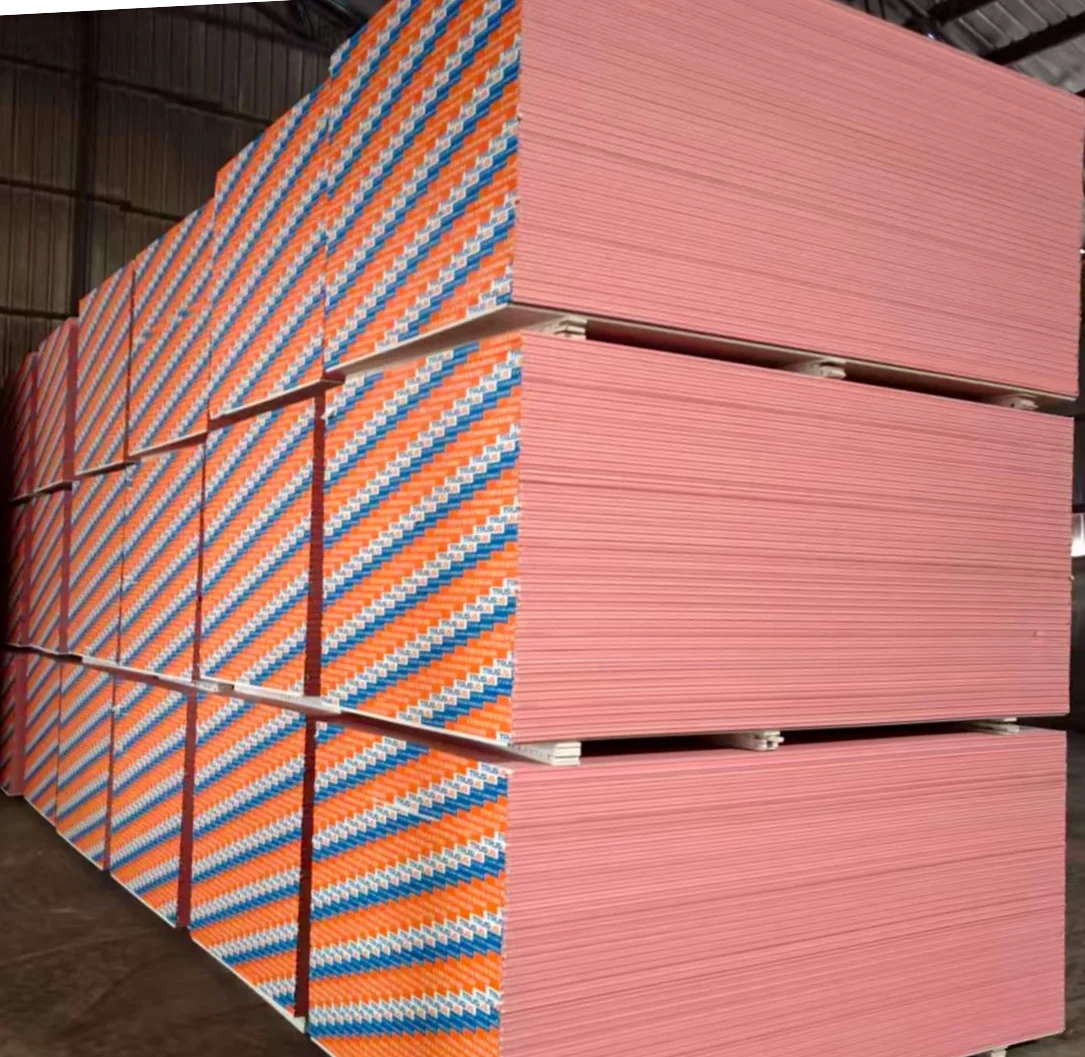
Gypsum Board Type Overview
| Type | Key Property | Application Area |
|---|---|---|
| Standard Paper-faced | General dry rooms | Interior walls and ceilings |
| Moisture-Resistant | Water repellant core | Kitchens, bathrooms |
| Fire-Resistant | Fiberglass reinforced | Fire-rated partitions |
| Acoustic / Impact Board | Noise control, toughness | Studios, hospitals, public buildings |
Performance System Logic
| Building Need | Matching Board | Reason |
|---|---|---|
| Durability | High-density board | Resists cracking |
| Safety | Fire-rated board | Controls flame spread |
| Comfort | Acoustic board | Reduces noise |
| Economy | Standard board | Cost-effective balance |
Choosing the right board achieves full lifecycle efficiency and comfort.
Are There Different Grades of Gypsum?
Yes, gypsum boards come in different grades based on density, formulation, and certification. Higher grades use refined gypsum, strong paper bonding, and precise chemical additives, providing improved strength and resistance to bending, moisture, and fire damage.
manufacturing insight: grade indicates control over structure and consistency.
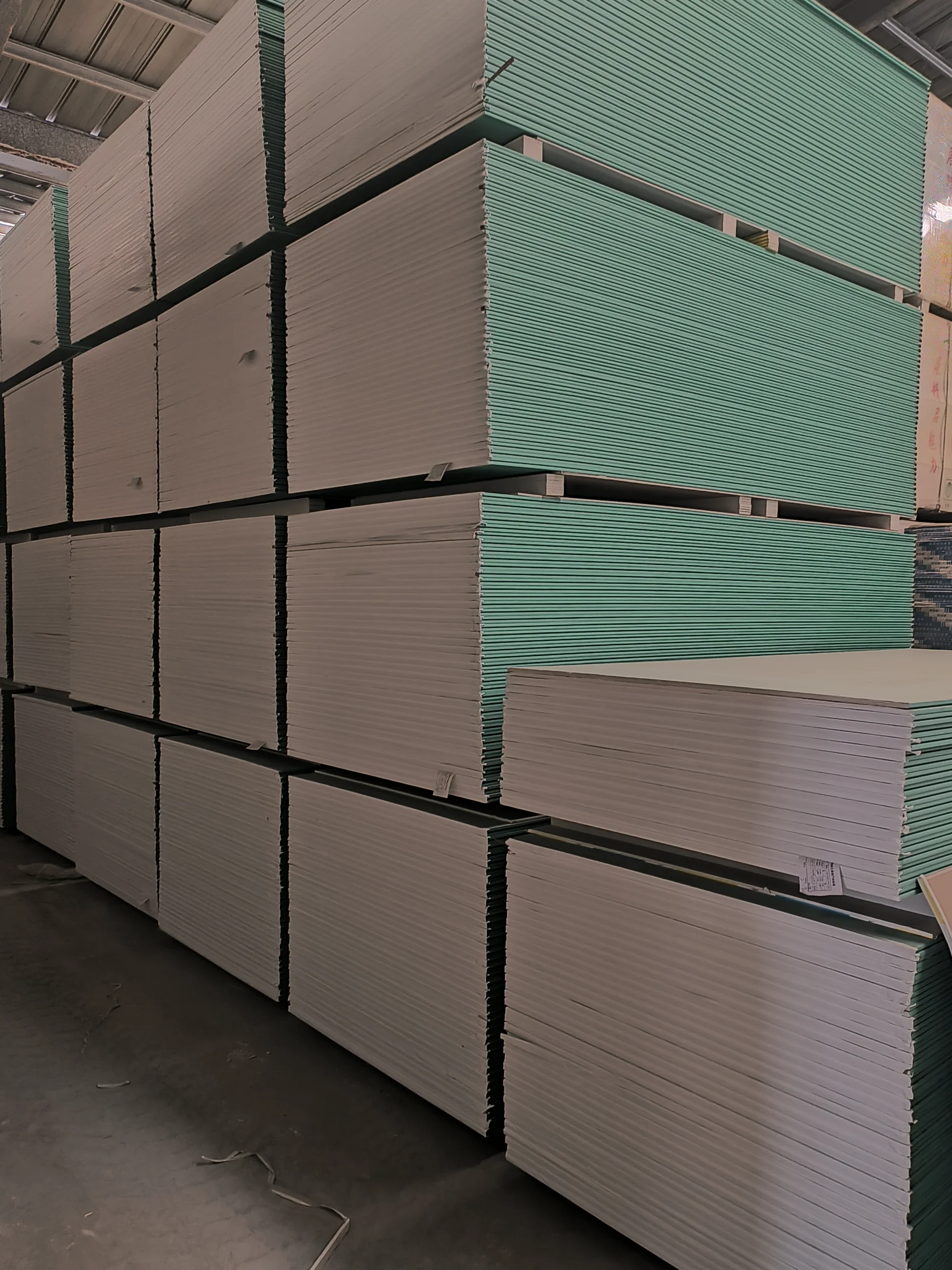
Gypsum Grade Chart
| Grade | Density (kg/m³) | Water Resistance | Fire Resistance | Typical Use |
|---|---|---|---|---|
| Economy | 700–750 | Low | Standard | Temporary interiors |
| Standard | 800–850 | Medium | Moderate | Residential walls |
| Premium | 900–950 | High | High | Commercial fire partitions |
| Specialized | 950+ | Enhanced | Enhanced | Hospitals, labs |
Grade Evaluation Logic
| Test | Target | Ideal Result |
|---|---|---|
| Bending strength | Structural stability | Smooth curve, no fracture |
| Water absorption | Moisture protection | <5% |
| Edge adhesion | Paper-core bond | Strong, no peeling |
| Size stability | Dimensional integrity | ±1 mm tolerance |
Grades measure precision, not just weight or appearance.
Which Side of Gypsum Board Faces Out?
The paper-finished side of a gypsum board faces outward. This side is smoother, designed for painting or finishing. The raw back faces the frame or studwork. Correct orientation ensures surface longevity and proper joint adhesion.
installation insight: direction equals durability.
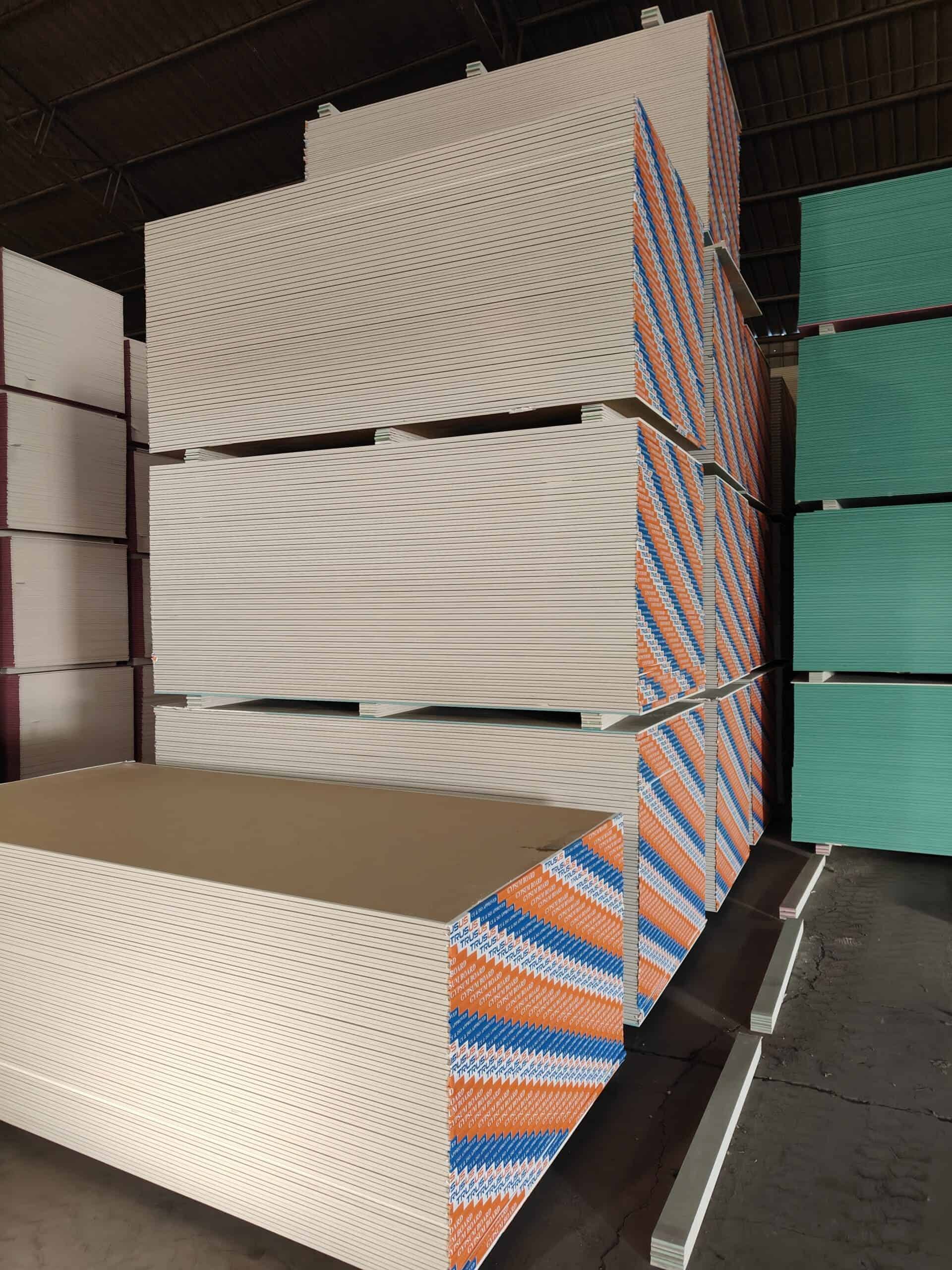
Board Installation Guide
| Side | Appearance | Function | Faces Out? |
|---|---|---|---|
| Paper-finished | Smooth, light-colored | Finishing surface for paint | ✅ Yes |
| Back surface | Rough, grayish | Structural bonding to frame | ❌ No |
Installation Stability Tips
| Step | Action | Reason |
|---|---|---|
| Mark orientation | Use printed front side | Prevents wrong placement |
| Avoid gaps between boards | Maintain smooth edge | Reduces cracking |
| Use proper screws | Do not over-tighten | Keeps paper intact |
| Seal joints properly | Apply tape and compound | Ensures visual smoothness |
Orientation is simple but vital for stable installation and long-term durability.
Conclusion
Checking gypsum board quality means testing the system, not only the surface. Good boards combine density, bonding, and certified resistance. TRUSUS believes quality equals reliability—each board must satisfy strength, safety, and application harmony to earn long-term trust in every structure.