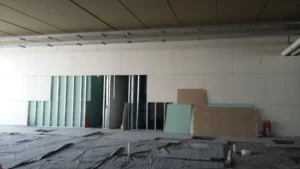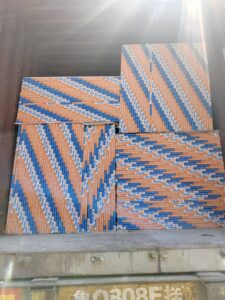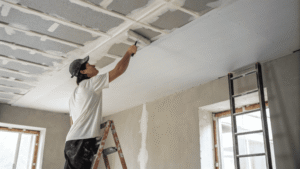


Understanding drywall material composition clarifies common misconceptions about this essential gypsum board–based product.
Drywall is not wood and contains no wood materials. Drywall (also known as gypsum board or plaster board) consists of a gypsum plaster core sandwiched between paper facings made from recycled fibers and additives.
The confusion often arises from drywall’s installation similarity to wood paneling and its paper surface texture.
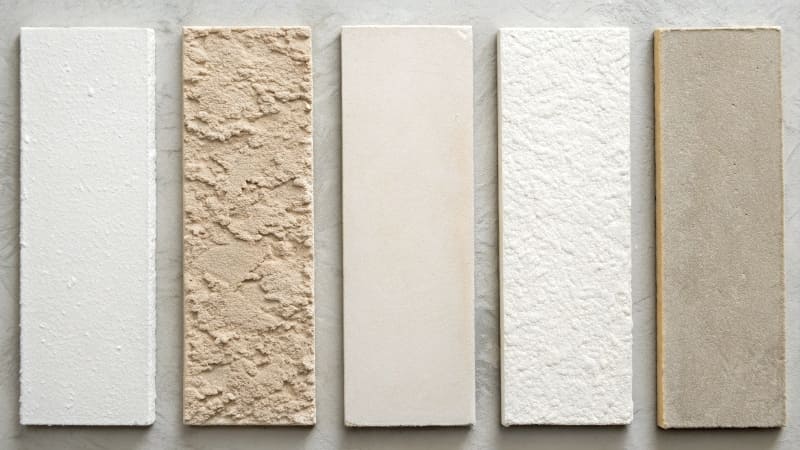
From my years working in a gypsum board factory and collaborating with multiple gypsum board companies, I’ve learned that drywall represents a completely different material category—a mineral-based composite developed for construccion en seco (dry construction) systems, not for wood-based framing or finishing.
Are Plaster and Drywall the Same?
Although both provide smooth wall finishes, plasterboard drywall and traditional plaster differ entirely in construction, technique, and performance.
Plaster and drywall are not the same.
- Plaster is applied wet over lath or masonry.
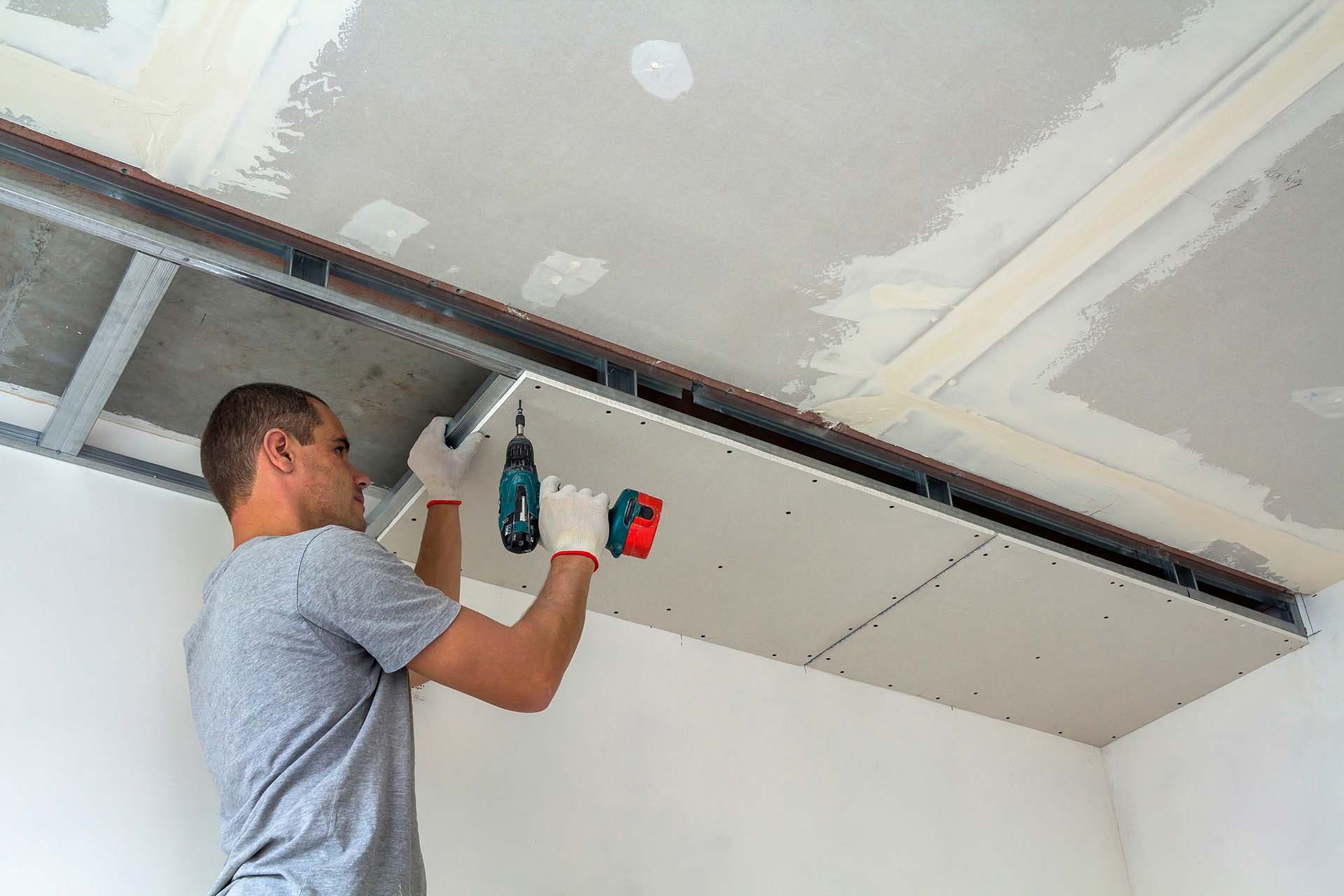
- Gypsum boards or plaster boards are prefabricated panels attached mechanically to framing.
These two materials achieve similar appearances but through very different installation techniques.
Construction Method Comparison
| Aspect | Plaster System | Drywall / Gypsum Board System |
|---|---|---|
| Base Material | Lime or cement paste | Gypsum plaster inside paper |
| Installation | Hand-applied in layers | Screwed to drop ceiling grid or studs |
| Dry Time | Requires days to cure | Installed & finished quickly |
| Skill Level | Specialized plasterer | Standard carpentry skills |
| Thickness Control | Manual visual control | Factory-calibrated precision |
Plaster systems are heavy and slow to install, whereas gypsum boards streamline modern ceiling solutions and partition systems.
Performance Characteristics
| Performance Factor | Plaster Advantage | Gypsum Board / Drywall Advantage |
|---|---|---|
| Hardness | High surface strength | Easier repair |
| Installation Speed | Slow | Very fast |
| Fire Resistance | Moderate | Excellent (Type X and C boards) |
| Sound Absorption | Heavy, good dampening | Adjustable with board gypsum composites |
| Moisture Resistance | Excellent with lime mixes | Good with moisture-resistant gypsum ceiling tiles |
Today, most suspended ceiling companies rely on drywall material and gypsum boards for efficiency and predictable performance.
How Do I Know If My Wall Is Drywall or Wood?
To differentiate gypsum board drywall from wood paneling or plaster board, inspect surface consistency and sound.
Drywall identification clues:
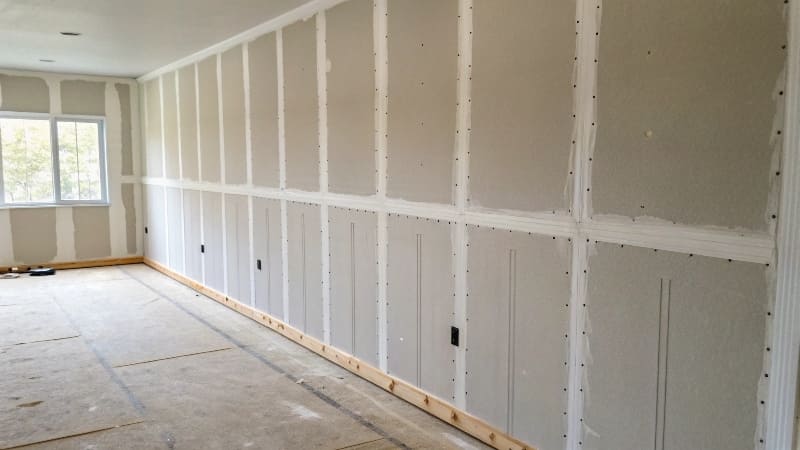
- Seam lines every 4 feet
- Hollow sound when tapped
- Smooth, unfinished back cut at outlets
Wood panel indicators:
- Visible grain
- Solid or sharp sound when tapped
- Board joints following lumber widths
| Test | Drywall Response | Wood Response | Plaster Response |
|---|---|---|---|
| Knock Test | Hollow thud | Solid | Dense, high note |
| Texture | Smooth paper surface | Visible grain | Slight texture |
| Pushpin Test | Easy entry | Harder resistance | Very tough |
| Seam Pattern | Every 4 ft | Irregular | None |
If you remove a switch plate, gypsum boards reveal cut edges, confirming plasterboard drywall or board gypsum composition.
What Type of Material Is Drywall?
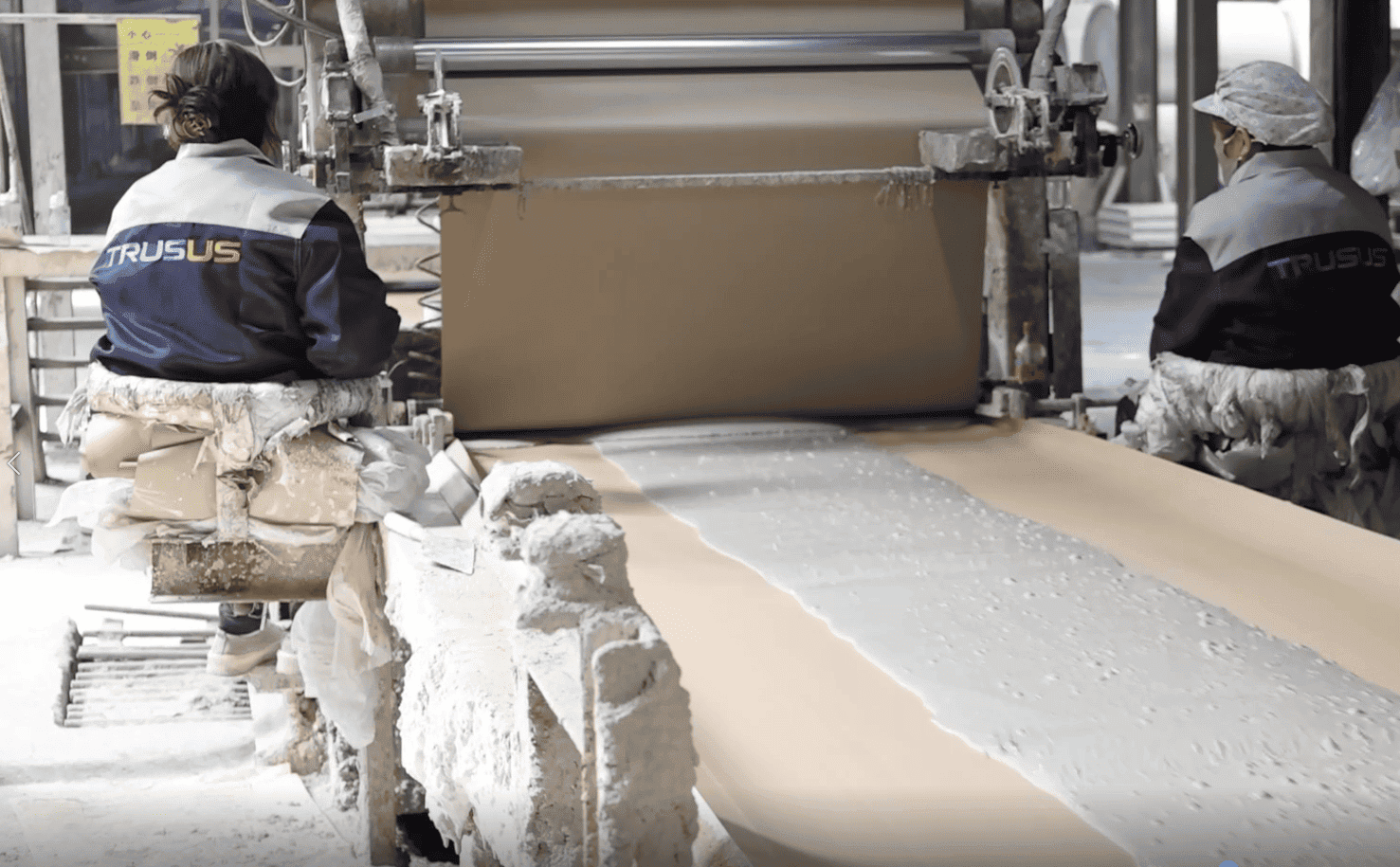
Drywall is a gypsum-based composite panel—a non-wood, mineral material created through industrial processing at a gypsum board factory.
It features a gypsum plaster core (calcium sulfate dihydrate) and paper or fiberglass facings.
This engineered combination gives gypsum boards their fire resistance, workability, and stable surface ideal for ceiling solutions, drywall partitions, and drop ceiling tiles.
Gypsum Core Composition
| Component | Percentage | Purpose |
|---|---|---|
| Gypsum plaster (core) | 90–95% | Structure & fire performance |
| Paper fiber | 1–2% | Surface bonding |
| Starch | 1–2% | Adhesion support |
| Foam agent & additives | <1% | Density and setting control |
High-quality cores are produced under strict control in gypsum board companies, ensuring consistent board gypsum density and stability.
Facing Material Options
| Facing Type | Composition | Use |
|---|---|---|
| Standard Paper | Recycled paper | Residential walls |
| Mold-Resistant | Fiberglass paper | Bathrooms, kitchens |
| Fire-Rated Type X | Fibrous core additives | High-rise or fire zones |
| Plaster Board (high strength) | Heavy backing | Public buildings |
| PVC-Coated Surface | Decor-enhanced | Used in price PVC ceiling panel designs |
Faced gypsum boards are also used in drop ceiling grid systems or with decorative ceiling design boards in interior design.
Drywall Manufacturing Process
Drywall production is a continuous, low-waste process distinct from lumber or metal fabrication.
| Stage | Method | Control |
|---|---|---|
| Gypsum prep | Calcining and mixing | Mineral ratio checks |
| Forming | Continuous sheet casting | Thickness precision |
| Drying | Heated tunnels | Moisture control |
| Cutting & Edge Finishing | Machine trimmed | Tight tolerances |
| Packaging | Bundled for site | Damage-resistant |
Both gypsum board factories and suspended ceiling companies adopt sustainable operations such as recycling water, heat recovery, and paper reuse.
Performance Classification Standards
| Type | Feature | Typical Application |
|---|---|---|
| Type X | Fire Resistant | Walls, stair shafts |
| Type C | Ceiling rated | Drop ceiling tiles, gypsum ceiling tiles |
| Type MR | Moisture resistant | Kitchens & baths |
| Type AR | Impact resistant | Schools, hospitals |
| Regular | General walls & plasterboard drywall ceilings |
All gypsum boards follow ASTM C36/C473 specifications, ensuring durable building performance comparable to or exceeding traditional materials.
Conclusion
Drywall is not wood—it is a mineral-based gypsum board product manufactured from calcium sulfate dihydrate with paper or fiberglass surfacing.
Unlike wood walls, gypsum boards offer uniformity, cost-efficiency, and fire safety.
Plaster board and drywall material differ in application: plaster involves hand finishing, while board gypsum panels are mechanically installed.
When combined with ceiling solutions such as drop ceiling tiles, gypsum ceiling tiles, or PVC ceiling panels, drywall forms a core part of modern construccion en seco systems.
Manufactured by trusted gypsum board factories or suspended ceiling companies, these products enable safe, smooth, and productive construction without dependence on wood—all key to sustainable modern architecture.