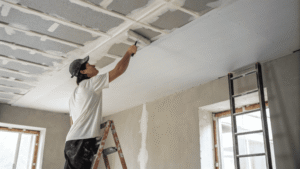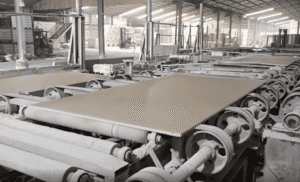


Many people looking to create quieter interiors start with this question: “Is gypsum board soundproof?”
Gypsum board alone is not fully soundproof, but when used correctly in a sound-rated wall system—such as double-layered boards with insulation and steel studs—it offers strong noise reduction performance that meets most interior acoustic standards.
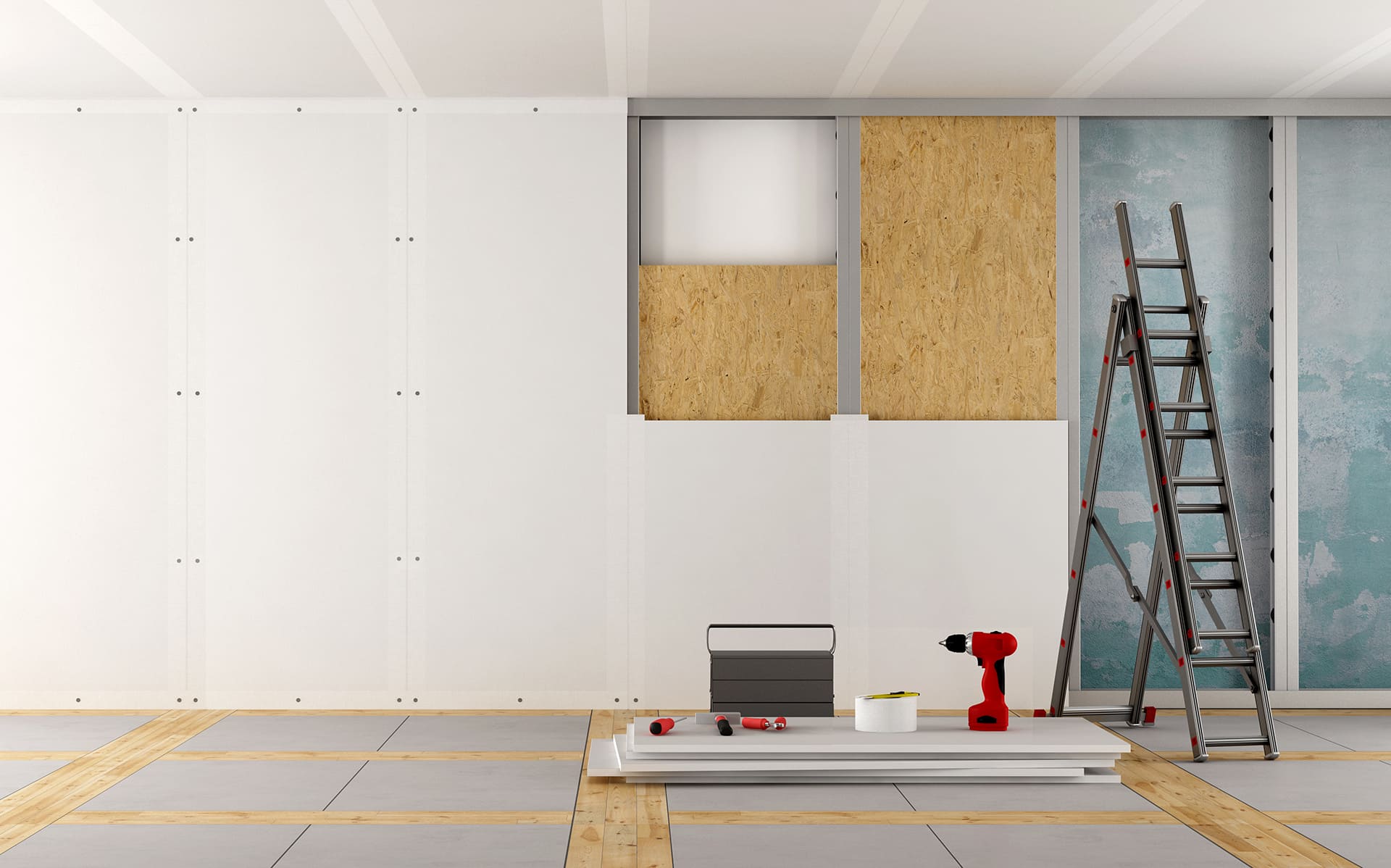
When I began producing gypsum boards, most customers cared only about surface smoothness or fire resistance. Now, more people ask about sound absorption, echo control, and system performance—a sign of how the market is evolving from material buying to acoustic thinking.
Is Gypsum Good for Soundproofing?
Clients often assume high density automatically means great sound blocking. That’s partially true, but not the full story.
Gypsum is a good soundproofing material within a system. Its density and layered structure help reduce airborne sound transmission, especially when used with acoustic insulation like mineral wool or glass fiber between boards.
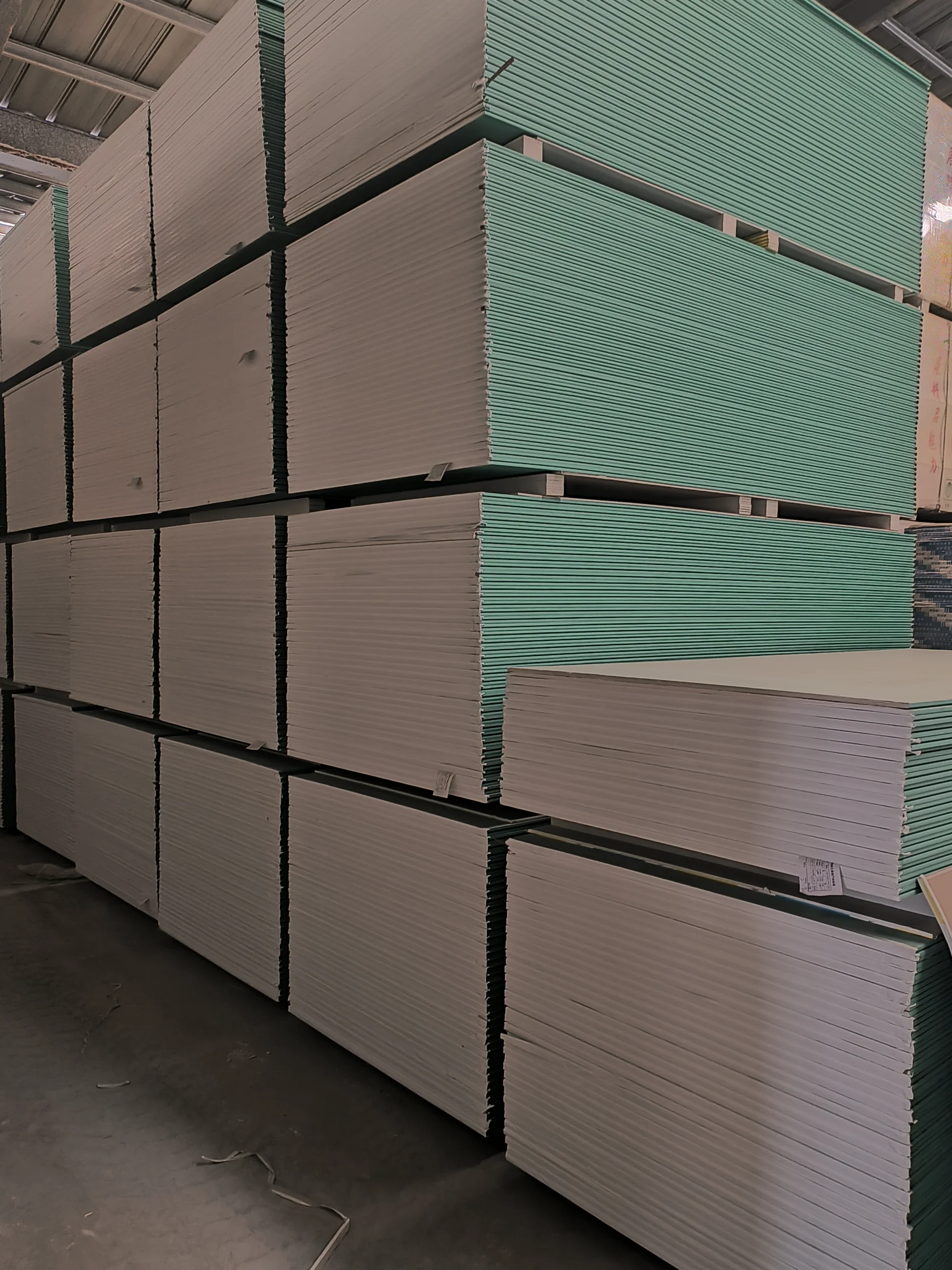
How Gypsum Works in an Acoustic System
In my projects, I’ve found that gypsum panels function best as energy absorbers rather than full barriers. The effectiveness comes from combining mass, damping, and separation.
| Element | Function | Key Tip |
|---|---|---|
| Gypsum Board Layers | Adds mass to block airborne sound | Use double 12mm layers on each side |
| Metal Stud Frame | Breaks structural sound paths | Choose staggered or resilient channels |
| Acoustic Insulation | Absorbs middle-frequency noise | Install mineral wool in the cavity |
| Sealant | Prevents sound leaks | Apply continuous acoustic caulking at joints |
The goal is not only to stop sound, but also to control how sound energy moves and dissipates across layers.
What Is the Most Effective Soundproofing Material?
Many materials claim “soundproofing” powers, yet no single one achieves silence alone. Real performance comes from layered systems combining mass, absorption, and decoupling.
The most effective materials include dense gypsum board, mineral wool insulation, acoustic vinyl, and resilient channels to isolate vibrations and reduce resonance.
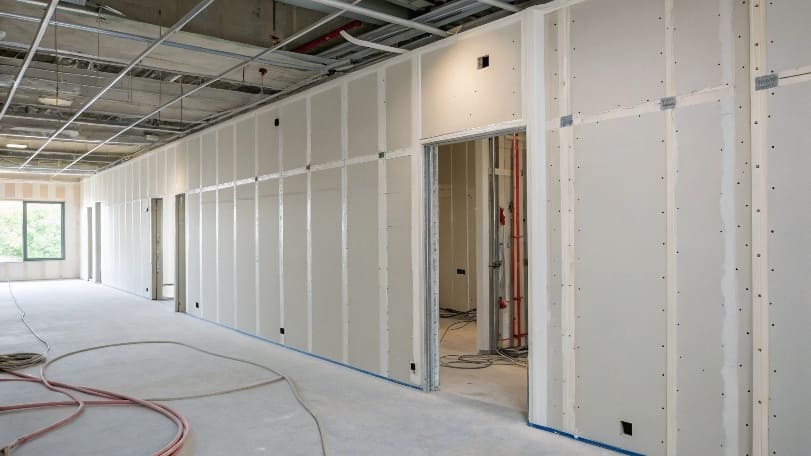
Comparing Common Soundproofing Materials
When designing quiet rooms, I compare materials not by marketing claims but by measurable Sound Transmission Class (STC) values. Here’s a concise summary:
| Material / System | Typical STC (Single Wall) | Features | Notes |
|---|---|---|---|
| Single 12mm Gypsum Board | ~33–35 | Lightweight, basic separation | Good for partitioned offices |
| Double-Layer Gypsum Board + Insulation | ~50–55 | Strong noise reduction | Residential & commercial use |
| Acoustic Vinyl + Gypsum System | ~60+ | High mass barrier | For studios & hospitals |
| Concrete Wall (100mm) | ~50 | Very dense | Not flexible for retrofits |
Pure “soundproof” materials rarely exist; effective design comes from combining lightweight flexibility with acoustic mass—and gypsum remains the foundation of that balance.
How to Make Gypsum Partition Soundproof?
This is where real engineering starts. Asking “how” shifts the conversation from material selection to system construction.
To make a gypsum partition soundproof, use a double-stud frame, fill the cavity with mineral wool, and install two layers of gypsum board on each side with sealed joints.

Steps for Building an Effective Soundproof Gypsum Partition
Having built partitions for hotels, offices, and schools, I follow a few simple but reliable rules:
-
Double Layer Boards: Two 12mm boards add mass and prevent sound transmission through panel vibration.
-
Insulate Cavity: Fill with high-density mineral wool (40–60 kg/m³) to absorb airborne noise inside the wall.
-
Use Resilient Channels: Disconnect wall surfaces from direct stud contact to stop vibration transfer.
-
Seal All Joints: Apply acoustic sealant around boards, electrical boxes, and perimeter gaps.
| Component | Function | Installation Tip |
|---|---|---|
| Double Stud or Resilient Channel | Isolate sound vibration | Maintain 25mm air gap |
| Acoustic Insulation | Absorb middle-range frequencies | Fit snugly, avoid compression |
| Double Gypsum Layers | Add mass barrier | Stagger joints for better damping |
| Sealing Compound | Block air leak paths | Required at all perimeters |
By combining these methods, gypsum partitions can reach STC 50–60, comparable to brick walls—while staying lighter, faster to install, and more flexible for later modification.
Conclusion
Gypsum board itself isn’t perfectly soundproof, but in a well-designed acoustic wall system—with insulation, resilient framing, and sealed joints—it performs impressively. The most effective soundproofing comes from system design, not material thickness. When used properly, gypsum partitions can achieve quiet, private, and professional sound environments across homes and workplaces—showing that true silence is always built, not bought.