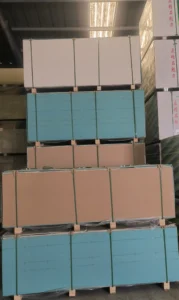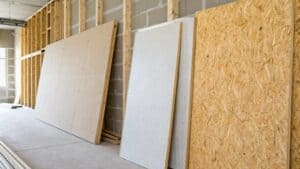


When customers ask about false ceiling tiles and ceiling design boards, they're often surprised by the variety of options available from each gypsum board company and suspended ceiling company today.
False ceiling tiles are primarily made of mineral fiber, gypsum board, plaster board, metal, PVC, or wood fiber, with gypsum boards and mineral fiber being most common for both commercial and residential applications.
Each drywall material has its own benefits for acoustics, moisture resistance, fire safety, and design flexibility within modern ceiling solutions.

From years of working with gypsum board factories and helping customers select suitable drop ceiling tiles, I've learned that material selection dramatically affects both system performance and long-term satisfaction.
Are False Ceilings Good or Bad?
False ceiling systems made of gypsum boards, plaster boards, or drop ceiling grid assemblies offer many advantages but require proper design.
False ceilings are generally beneficial because they hide mechanical systems, improve acoustics, enhance lighting, and provide thermal insulation. However, poor installation or low-quality drywall material can cause sagging or moisture issues — especially in humid environments with gypsum ceiling tiles or price PVC ceiling panels.

False Ceiling Benefit Analysis
After analyzing hundreds of ceiling design board projects from different suspended ceiling companies, we summarized the top benefits below:
| Benefit Category | Specific Advantages | Impact Level | Cost-Benefit Ratio |
|---|---|---|---|
| Mechanical Concealment | Hides ducts, cables, and conduits | High | Excellent |
| Acoustic Control | Sound absorption using gypsum boards and mineral fiber | Very High | Excellent |
| Lighting Integration | Works with LED strips and recessed lighting | High | Very Good |
| Thermal Insulation | Creates air gap for better comfort | Moderate | Good |
| Maintenance Access | Easy to replace or remove drop ceiling tiles | High | Excellent |
| Fire Safety | Fire-rated plasterboard drywall options | Critical | Essential |
Acoustic improvement is often the most noticeable advantage, especially when high-density board gypsum or mineral-fiber ceiling design board is used.
Common Problems and Solutions
These are the most common issues we see when gypsum board ceilings aren’t properly installed:
| Problem | Cause | Prevention | Solution Cost |
|---|---|---|---|
| Sagging Tiles | Weak frame, wrong humidity level | Proper drop ceiling grid spacing | $2–5 per sq ft |
| Moisture or Mold Damage | Roof leaks, poor ventilation | Use treated gypsum boards or PVC panels | $5–15 per sq ft |
| Difficult Access | No removable panels | Plan access panels in advance | $50–200 each |
| Thermal Leakage | Gaps in insulation | Use dense plasterboard drywall | $3–8 per sq ft |
| Lighting Problems | Heat buildup | Use heat-rated ceiling design boards | $100–500 per fixture |
Good moisture management prevents failure in both false ceiling tiles and drywall materials, saving maintenance costs later.
What Is the Point of a False Ceiling?
A false ceiling serves many practical and aesthetic purposes beyond just appearance.
It conceals systems, improves acoustics, and creates thermal separation. In modern construccion en seco projects, gypsum boards and plasterboards are key materials for both ceilings and partitions due to versatility and finish quality.

Primary Functions by Building Type
| Building Type | Primary Functions | Secondary Benefits | Typical Materials |
|---|---|---|---|
| Offices | Acoustic comfort | Lighting & HVAC concealment | Gypsum board, mineral fiber |
| Healthcare | Hygiene, cleanable surface | Washable gypsum ceiling tiles | Antimicrobial gypsum |
| Education | Durability | Noise control | Plasterboard drywall |
| Retail | Visual flexibility | Security systems | PVC, metal |
| Residential | Aesthetics, insulation | Fire rating | Gypsum boards, wood fiber |
| Industrial | Safety & corrosion resistance | Easy maintenance | Metal panels, composite |
Gypsum board ceilings remain the preferred choice in most ceiling solutions thanks to cost efficiency and fire resistance.
System Integration Capabilities
False ceilings work best in integrated design systems where different trades (HVAC, electrical, etc.) share the drop ceiling grid space.
| System Type | Integration Method | Performance Benefit | Complexity |
|---|---|---|---|
| HVAC | Uses plenum above drop ceiling tiles | Improved air distribution | Moderate |
| Electrical | Lighting fixtures fixed to board gypsum systems | Safe & aesthetic | Simple |
| Fire Protection | Fire-rated plaster board assemblies | Safety compliance | High |
| Networking | Cable trays hidden above gypsum boards | Easy maintenance | Simple |
| Lighting Control | Sensors integrated into ceiling | Energy savings | Moderate |
| Security | Hidden camera mounts | Discreet solution | Simple |
Plenum spaces add major value by allowing building systems to coexist invisibly above false ceiling tiles and gypsum boards.
Why Is It Called a False Ceiling?
It’s called a false ceiling because it’s a secondary ceiling formed below the structural ceiling using suspended ceiling grids, gypsum boards, or drop ceiling tiles.
The word “false” doesn’t mean “fake” — it means a constructed or secondary surface for design, acoustic, and maintenance purposes.

Terminology and Structure
| Term | Definition | Usage |
|---|---|---|
| Structural Ceiling | Original building ceiling | Load-bearing |
| False Ceiling | Decorative system below structure | Common in interiors |
| Suspended Ceiling | Grid-based panel system | Used by ceiling companies |
| Lay-in Ceiling | Modular removable panels | Facility access |
| Ceiling Design Board | Decorative gypsum or PVC board | Adds aesthetics |
Most suspended ceiling companies prefer modular systems for flexibility, using drop ceiling grids with gypsum ceiling tiles or PVC ceiling panels depending on project type and price PVC ceiling panel budgets.
Historical Development
| Era | Material | Innovation |
|---|---|---|
| Ancient | Plaster, wood | Simple protection |
| Industrial | Tin, plaster board | Fire safety |
| Modern | Gypsum board, drop ceiling tiles | Acoustic performance |
| Contemporary | Smart integrated gypsum systems | Energy efficiency |
Advances in gypsum board factory production have made board gypsum products lighter, stronger, and more moisture-resistant, supporting global growth in construccion en seco markets.
Conclusion
False ceiling tiles are most often made from gypsum board, plaster board, mineral fiber, or PVC, chosen for durability and acoustic performance.
Whether using drop ceiling tiles, gypsum boards, or plasterboard drywall, success depends on matching design to environment.
Properly designed ceiling solutions from an experienced suspended ceiling company last decades with minimal maintenance.
Always source from a reputable gypsum board company or gypsum board factory for consistent quality, and verify moisture protection—especially near HVAC systems or humid zones where PVC ceiling panels or gypsum ceiling tiles provide added value.
Ultimately, false ceilings make spaces safer, quieter, and more comfortable, proving their worth in both traditional and construccion en seco projects worldwide.