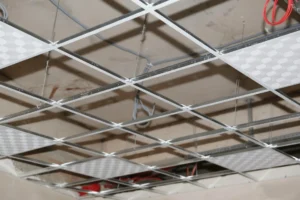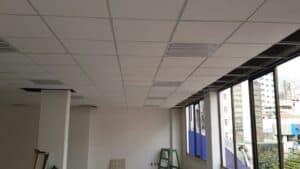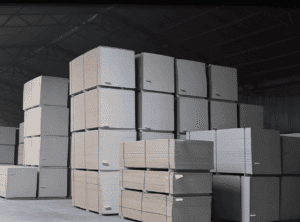


9mm gypsum board is mainly used for ceilings and light non-load-bearing partitions. It offers flexibility, easy installation, and reduced structural loading, making it ideal for residential and commercial ceiling systems where weight and precision matter more than thickness.
TRUSUS insight: thickness shows structure design, not product quality.

9mm board supports ceiling systems by reducing frame load while keeping smooth surface performance and minimizing sag through proper spacing and joint treatment.
Should I Use 9mm or 12mm Plasterboard?
Select 9mm plasterboard for ceilings and 12mm for partition walls or higher-strength areas. The difference reflects load type, not strength quality. Matching board thickness to system function ensures balanced durability, weight, and cost efficiency.
TRUSUS product insight: choose the thickness by panel role, not by appearance.
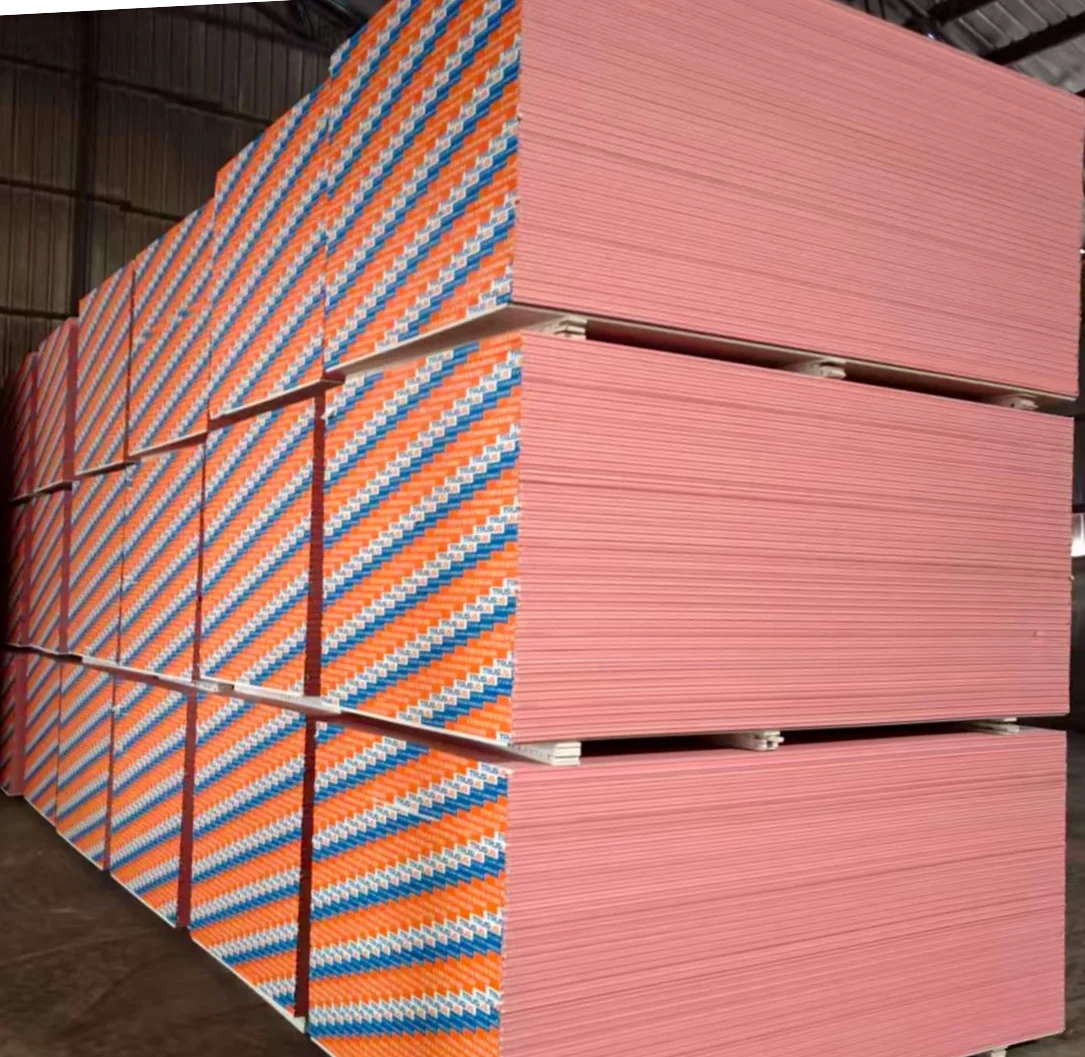
TRUSUS Gypsum Board Thickness Recommendation
| Application Type | Recommended Thickness | Purpose |
|---|---|---|
| Ceiling | 9 mm | Light weight, anti-sag performance |
| Standard partition | 12 mm | Strength and impact resistance |
| Acoustic wall | 12–15 mm | Sound insulation improvement |
| Fire-rated wall | 12–15 mm double-layer | Extended fire resistance |
Structural Logic
| Physical Factor | 9mm Role | 12mm Role |
|---|---|---|
| Weight | Light, easy to install overhead | Heavier, requires stronger framing |
| Flexibility | Reduces load on ceiling system | Provides solid partition strength |
| Fire protection | Limited, suitable for general use | Supports higher fire resistance |
| Sound control | Moderate | Strong acoustic isolation |
Thickness defines system behavior, not visual strength.
What Size Drywall Is Used for Residential Ceilings?
Most residential ceilings use 9mm or 10mm drywall sheets, depending on span and frame spacing. These light panels reduce stress on ceiling joists and allow clean, uniform surfaces with minimal sag when correctly supported by the framing pattern.
TRUSUS installation insight: lighter means safer overhead.
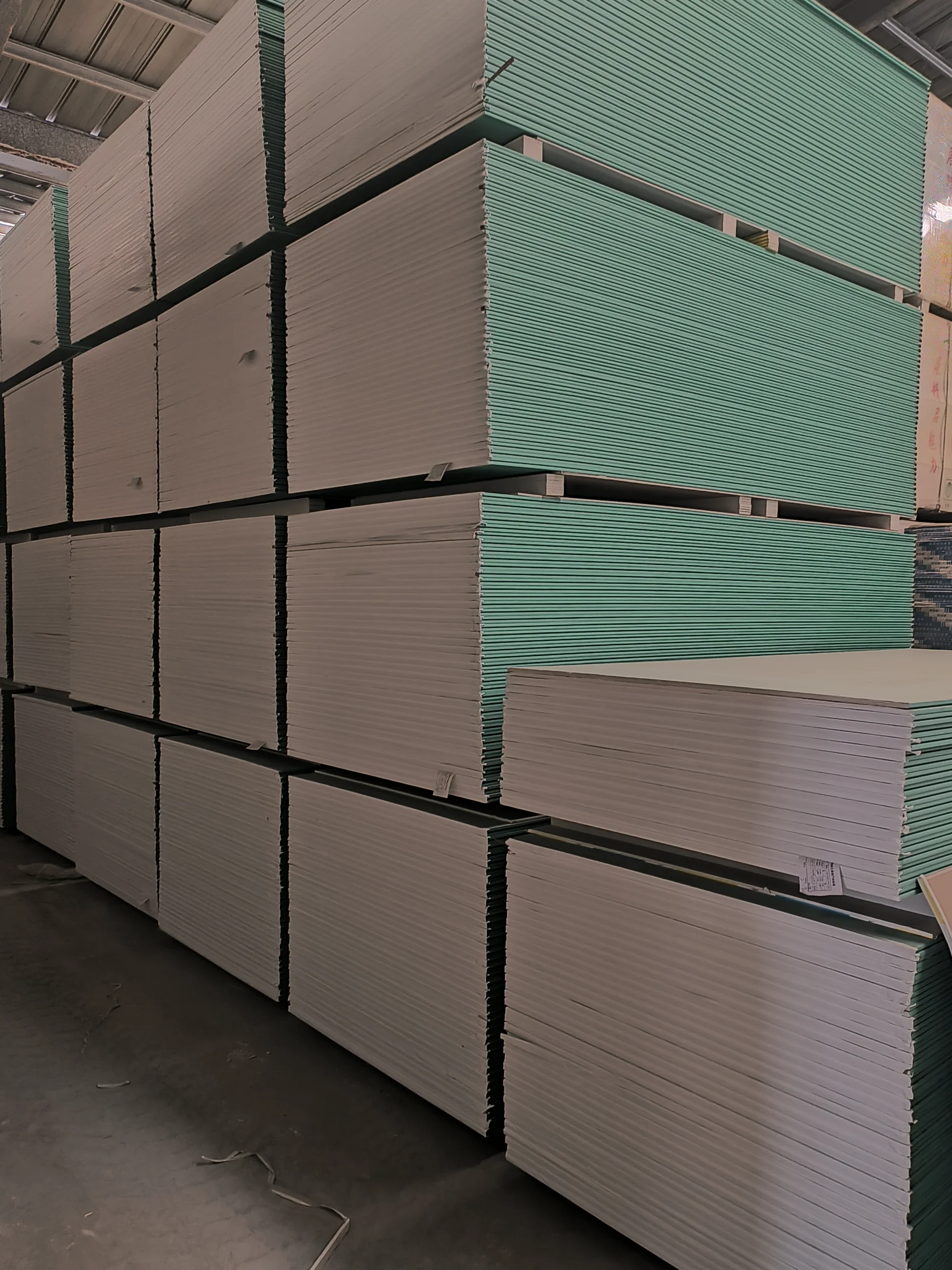
TRUSUS Ceiling Board Setup
| Ceiling Frame Spacing | Optimal Board Thickness | Reason |
|---|---|---|
| 300 mm | 9 mm | Prevent downward bending |
| 400 mm | 10–12 mm | Balance rigidity and cost |
| ≥500 mm | 12 mm | Avoid mid-span vibration |
Ceiling Design Considerations
| Concern | Control Method | Typical Result |
|---|---|---|
| Sagging | Frame spacing ≤400 mm | Smooth alignment |
| Cracking | Proper screw placement | Stable joints |
| Soundproofing | Add insulation layer | Enhanced acoustic comfort |
Residential ceilings prefer lighter drywall because they depend more on structure precision than raw stiffness.
Why Use Thicker Drywall on Ceilings?
Thicker drywall improves rigidity, fire resistance, and sound insulation when ceilings have wide frame spacing or added mechanical loads. While 9mm works for small spans, 12mm provides extra stiffness and resistance to thermal movement, reducing long-term deformation.
TRUSUS safety insight: choose thicker when the system demands it, not by habit.
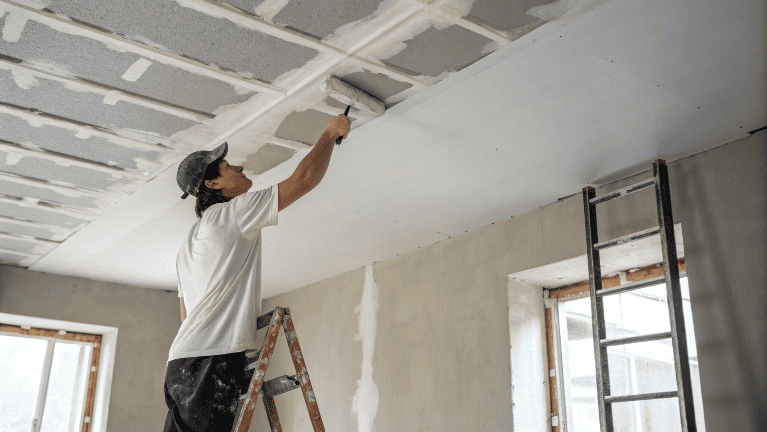
TRUSUS Structural Comparison Table
| Ceiling Condition | Recommended Thickness | Reason |
|---|---|---|
| Small frame spacing (≤400 mm) | 9 mm | Flexible, economical |
| Moderate spacing (400–500 mm) | 12 mm | Adds stiffness and stability |
| Heavy fixture support | 12–15 mm | Prevents cracking under weight |
Performance Parameters
| Technical Factor | Effect of Thickness | Description |
|---|---|---|
| Fire rating | Extends protection time | Slower temperature transfer |
| Acoustic dampening | Higher mass reduces noise | Enhances privacy |
| Impact resistance | Thicker board resists stress | Prevents edge chipping |
Thicker boards are worth their weight only in structural or functional scenarios that justify the load.
Conclusion
Choose drywall thickness based on system logic, not appearance. 9mm suits ceilings; 12mm suits walls. TRUSUS believes true quality lies in how gypsum boards work with framing, joints, and environment—where every millimeter represents precision and system harmony.