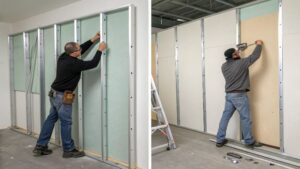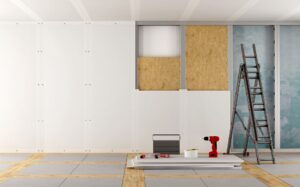


Homeowners often ask how long drywall lasts before needing replacement, but its true lifespan depends not only on time but also on moisture control, structural conditions, and ongoing maintenance habits.
Drywall typically lasts 25–70 years if properly installed and maintained under stable interior humidity. It doesn’t rot, rust, or decay like wood or metal but deteriorates when exposed to moisture, impact damage, or structural stress.
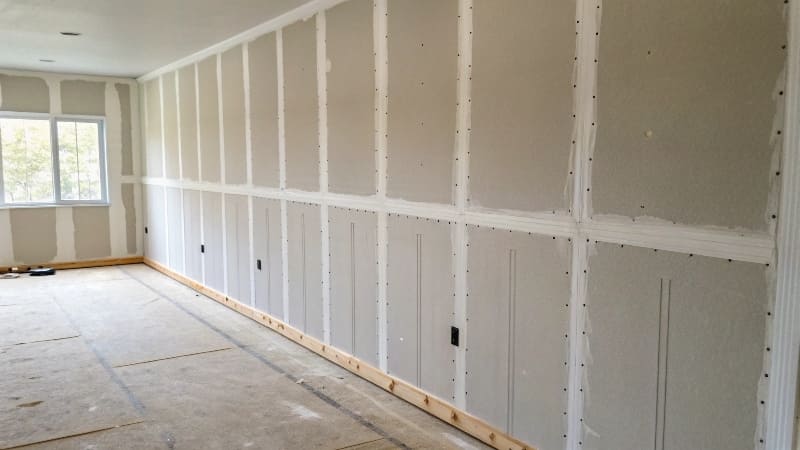
During years manufacturing and testing gypsum boards, I learned that lifespan is determined by the building system rather than by the material alone. Drywall performs best when the environment remains dry, stable, and well-ventilated throughout its service period.
Does Drywall Go Bad Over Time?
Many people assume drywall automatically degrades as it ages, but time alone isn’t the main factor. It’s environmental exposure and neglect that cause deterioration over years of occupancy and use.
Drywall doesn’t go bad simply because of age. It lasts decades when kept dry and structurally supported. Premature deterioration happens when exposed to leaks, condensation, or thermal cycling that weakens the gypsum core and paper facing.
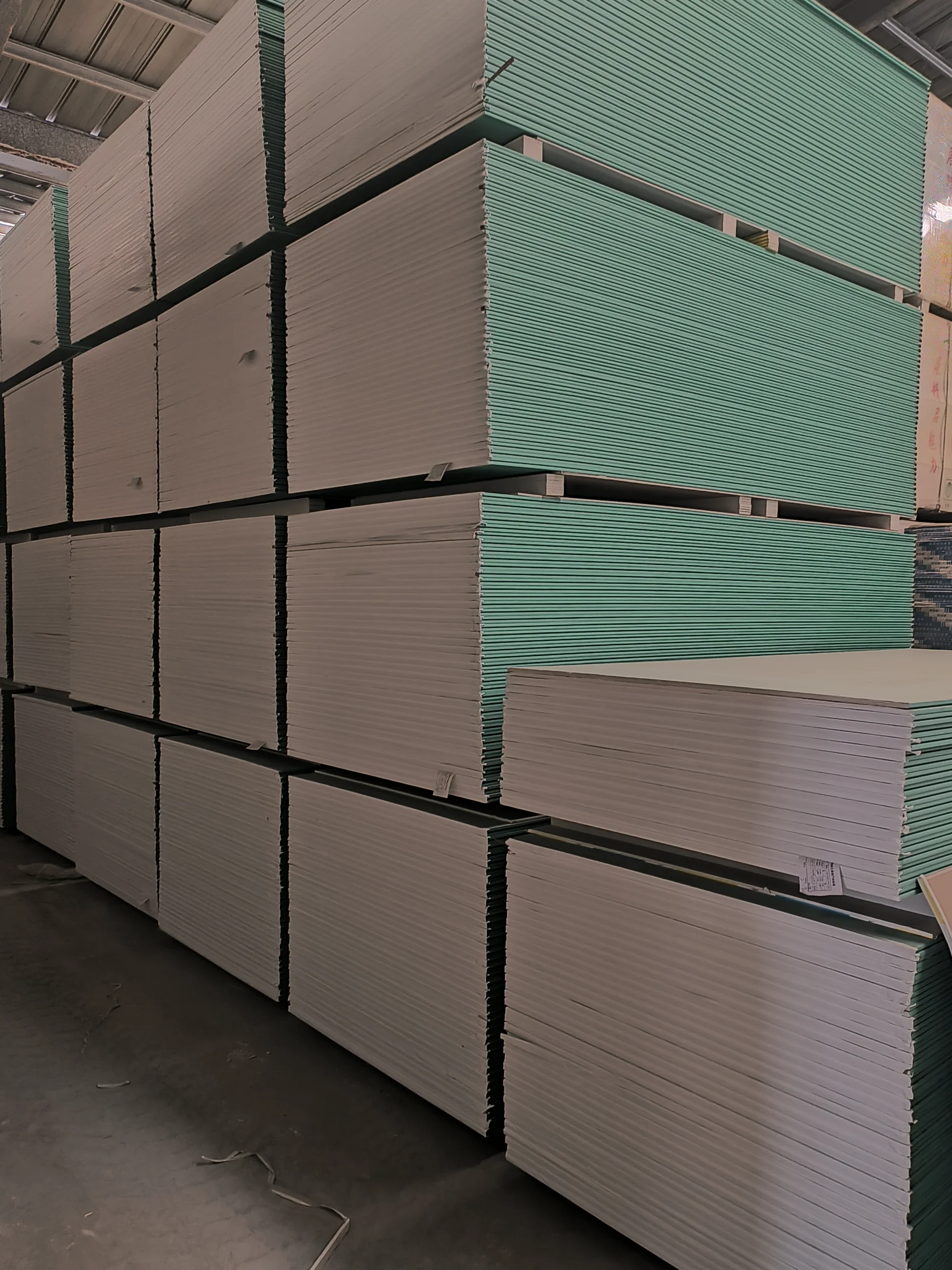
Understanding the Aging Process of Drywall Materials
Drywall’s chemical composition makes it inherently stable. Over time, it doesn’t chemically dissolve, but external factors such as humidity and foundation shifting can shorten its useful life. I have observed that dry, temperature-controlled rooms with consistent maintenance often retain their original drywall decades later.
Moisture infiltration remains the leading cause of aging signs. Once water penetrates paper facing and reaches the gypsum core, structural strength decreases. Mold formation often follows, indicating deeper degradation and potential air quality risks.
Thermal expansion and contraction impose subtle stress on boards, especially near joints or framing connections, gradually creating hairline cracks if insufficiently taped or supported during installation.
Physical impacts also lead to wear, especially in high-traffic areas. Denting and surface abrasion may not harm structure initially but can shorten long-term durability when continuously exposed.
Preventive maintenance helps extend life by sealing leaks, improving indoor air circulation, and inspecting surface integrity regularly to avoid unseen water accumulation behind wall coverings.
| Key Factor | Impact on Drywall Aging | Preventive Action |
|---|---|---|
| Humidity | Softens core, creates mold | Dehumidify, seal leaks |
| Structural Movement | Causes cracking | Reinforce framing |
| Temperature Fluctuation | Expands edges | Control climate |
| Physical Impact | Surface damage | Install protectors |
| Poor Installation | Uneven joints | Use correct screws and spacing |
| Air Quality | Dust accumulation | Maintain ventilation |
Does Drywall Get Brittle With Age?
People sometimes notice walls cracking with time and assume drywall becomes brittle like aged wood. In reality, brittleness isn’t caused by chemical aging but by long-term environmental imbalance or mechanical stress.
Drywall can feel brittle over time if exposed to low humidity or repeated structural stress. Aging gypsum loses moisture equilibrium, making the surface harder but more prone to cracking. However, in stable indoor environments, it retains flexibility and uniform strength.

Mechanical and Environmental Stress Effects on Drywall Flexibility
Brittleness arises from dimensional changes in the gypsum matrix caused by dryness or mechanical fatigue. During years analyzing failures from renovation projects, I found that controlled environments preserve flexibility far beyond expected service life.
Excessively dry air extracts bound moisture from gypsum crystals. This reduction in internal hydration decreases micro-level flexibility, resulting in fine cracks during minor structural shifts.
Thermal cycling accelerates brittleness by expanding and contracting joints, gradually weakening the bond between board and fasteners. In older buildings without modern insulation, temperature variation often leads to visible corner cracks.
Improper framing spacing amplifies vibrational stress, especially near doorframes. Over time, localized stress hardens the material surface, making it appear brittle while the inner structure remains largely intact.
Solutions include maintaining relative humidity between 40–60%, insulating exterior walls properly, and re-taping or resealing aged joints every decade to prevent visible failure.
| Cause of Brittleness | Description | Preventive Plan |
|---|---|---|
| Low Humidity | Dries gypsum core | Use humidifier |
| Repetitive Vibration | Uneven frame stress | Refasten screws |
| Thermal Cycling | Expansion and contraction | Insulate walls |
| Aging Joint Compound | Hardened surface | Reapply finish |
| Poor Ventilation | Cracks due to pressure shifts | Maintain airflow |
How Do You Know When Drywall Needs to Be Replaced?
Determining replacement time requires more than age calculation. The need appears when structural or moisture issues become irreversible. Watching for early signs prevents deeper wall system failures.
Drywall should be replaced when it has sustained water damage, visible mold, deep cracks, or structural deformation. Bubbling paint, sagging ceilings, or soft spots indicate that the core integrity has failed beyond patch repair.

Signs of Failure and Decision for Replacement
Identifying drywall failure early saves cost and prevents hidden mold contamination. Through inspections of aged buildings, I found that many owners replace drywall late simply due to lack of awareness of early warning signs.
Water Stains and Softness — These show water infiltration. Once gypsum loses structural hardness, replacement is mandatory before mold spreads through backing material.
Persistent Mold Growth — Discoloration and odor signal inaccessible moisture pockets. Cleaning surface alone doesn’t fix internal colony spread, requiring full panel replacement.
Structural Sagging — Low ceiling resilience or visibly bowed walls indicate weakened fasteners or soaked panels no longer distributing load evenly across framing.
Deep Cracking or Crumbling — Wide cracks mean stress fatigue beyond repair layer thickness. Structural re-assessment ensures replacement rather than resurfacing.
Insulation or Framing Upgrades — Renovations often reveal outdated framing. Replacement during these phases ensures improved soundproofing and fire safety consistent with newer codes.
Routine checks every few years prevent widespread failure by repairing local damage before it compromises wider structural performance and indoor safety.
| Indicator | Damage Description | Recommendation |
|---|---|---|
| Mold or Odor | Moisture contamination | Replace panels |
| Bubbling Paint | Internal moisture | Inspect behind |
| Sagging Surface | Core collapse | Full replacement |
| Soft or Weak Areas | Compressed gypsum | Replace section |
| Deep Cracks (>3 mm) | Stress failure | Structural inspection |
| Flaking Paper | Surface degradation | Partial replacement |
Conclusion
Drywall lifespan commonly ranges 25–70 years under proper conditions; it doesn’t expire with time but weakens from moisture or neglect. Materials may become brittle with environmental stress, and replacement becomes necessary once panels show water damage, sagging, deep cracks, or mold—signaling a shift from simple wear to system failure. Maintaining dry, stable environments ensures drywall remains strong, clean, and reliable throughout decades of service.