

What is the most common type of drywall?
Choosing the wrong drywall can cause mold, cracks, or wasted money. Many people don’t know the standard option that works best in most indoor spaces.
The most common type of drywall is standard gypsum board, also called regular white board, typically 1/2 inch (12.5mm) thick, used widely for indoor walls and ceilings.

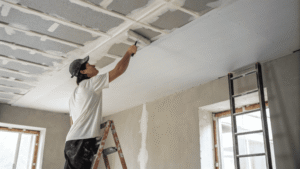
In my years in the drywall industry, I have seen homeowners overcomplicate their choices. Standard gypsum board works for most living rooms, bedrooms, and offices. It’s easy to cut, fast to install, and affordable. It only becomes a problem when installed in high-humidity areas like bathrooms, where moisture can cause mold. That is when special moisture-resistant boards are needed. By default, standard drywall remains the go-to choice because of its balance of cost, availability, and performance.
What are the 5 levels of drywall?
Many people assume drywall finishing is the same for all walls. This mistake often causes disappointment when the final paint job shows flaws.
Drywall has five finish levels: Level 1 (basic joint tape only) to Level 5 (perfect smooth surface for gloss paint or critical lighting).

I always tell my clients that the finish level directly affects the wall’s appearance under different lighting. Here’s what each means:
| Level | Description | Best Use |
|---|---|---|
| 1 | Tape in joints only | Hidden or temporary walls |
| 2 | Tape and cover screw heads | Garages, storage |
| 3 | Cover joints with one coat | Heavy texture finish |
| 4 | Smooth finish, 2 coats | Standard painted interiors |
| 5 | Smoothest surface possible | Gloss paint or strong side lighting |
Once, a client wanted Level 5 in every room without budget increase. I explained that in normal homes, Level 4 looks great and costs less. Level 5 is only needed for glossy paint or spotlight-heavy rooms. Managing expectations here saves money and avoids conflict.
Is gypsum board the same as drywall?
This is one of the most common questions from homeowners starting a build.
Yes, gypsum board and drywall are the same material. Gypsum board is the formal name, while drywall is the common term in North America.

Both terms refer to the same product: a gypsum core sandwiched between paper layers. In China, we say “gypsum board,” while in North America “drywall” is more common. The names are interchangeable in the construction industry. This difference in terminology sometimes confuses clients, especially those working with international suppliers or contractors. In my own projects, I use the term my client is most comfortable with to avoid misunderstandings in specification or orders.
| Name | Common Regions Used | Material Composition |
|---|---|---|
| Gypsum Board | Asia, Europe | Gypsum core with paper surfaces |
| Drywall | North America | Gypsum core with paper surfaces |
How many types of gypsum boards are there?
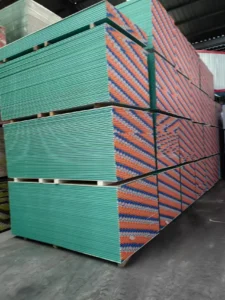
Seeing all the colored boards in a warehouse can be overwhelming for first-time buyers.
There are many types of gypsum boards, including standard, moisture-resistant, fire-resistant, soundproof, and impact-resistant boards, each for different conditions.

Gypsum boards are designed with different properties for their intended environments. I often see mistakes like using standard board in bathrooms instead of moisture-resistant green board. In kitchens, fire-resistant boards are better. For theaters or music rooms, soundproof boards make sense. For schools or gyms, impact-resistant boards work best. Choosing the wrong type shortens wall life and can lead to costly repairs.
| Type | Identifier Color | Best Use |
|---|---|---|
| Standard | White | Dry interior walls/ceilings |
| Moisture-Resistant | Green | Bathrooms, kitchens |
| Fire-Resistant | Pink/Red | Kitchens, fire-rated walls |
| Soundproof/Acoustic | Blue/Purple | Theaters, studios |
| Impact-Resistant | Various | Schools, gyms |
Conclusion
Knowing different drywall types and finish levels prevents costly mistakes and ensures walls look and perform as expected.