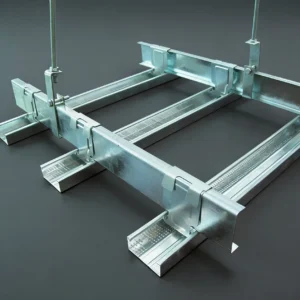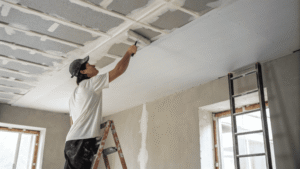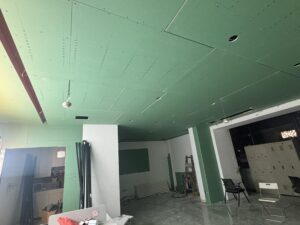


Standard C-stud thickness for high-rise partitions is 0.80-1.2mm gauge steel (20-18 gauge) with 92mm or 146mm depth depending on partition height and fire rating requirements, with 0.80mm suitable for standard partitions up to 4.5m height, 1.0mm for partitions 4.5-6m or high traffic areas, and 1.2mm for structural partitions or seismic zones requiring enhanced performance.
0.80mm gauge steel provides adequate strength for standard high-rise partitions up to 4.5m height with 600mm stud spacing. 1.0mm thickness offers enhanced rigidity for taller partitions or high-traffic commercial areas requiring dimensional stability. 1.2mm gauge delivers maximum structural performance for seismic applications and heavy door installations. Stud depth selection between 92mm and 146mm depends on acoustic requirements and service integration needs. Fire rating compliance may mandate thicker gauges for compartmentalization in high-rise applications.
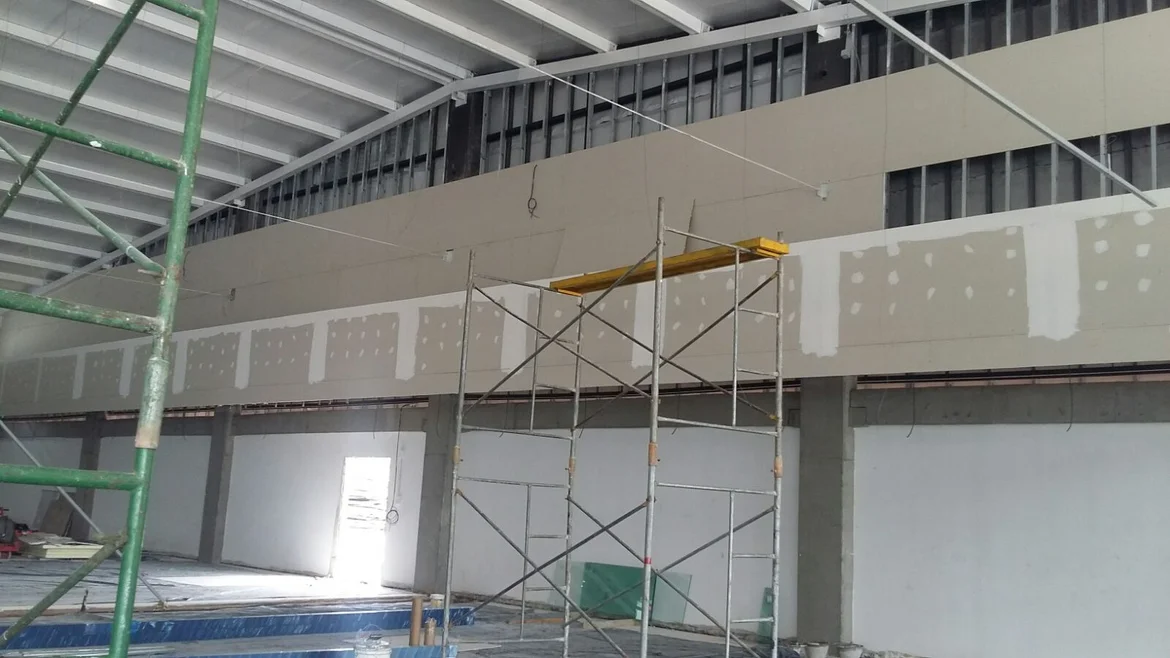
From my extensive manufacturing experience with light gauge steel systems, I've observed that proper stud thickness selection prevents costly callbacks from deflection issues in high-rise projects.
Can I Use 0.50mm Gauge Steel for External Load-Bearing Walls?
You cannot use 0.50mm gauge steel for external load-bearing walls as this thickness lacks sufficient structural capacity for vertical loads, wind resistance, and seismic forces, with minimum requirements being 1.2-2.0mm gauge depending on building height, with engineered load calculations and local building codes mandating heavier gauge steel for structural applications.
0.50mm gauge steel provides insufficient load capacity for structural applications with maximum safe use limited to non-load bearing partitions. Load-bearing walls require minimum 1.2mm thickness for residential applications and 1.5-2.0mm for commercial structures. Wind load resistance demands heavier gauge steel to prevent deflection and structural failure. Seismic performance requires engineered connections and appropriate steel thickness for energy dissipation. Building codes specifically prohibit light gauge steel in primary structural applications without engineering certification.
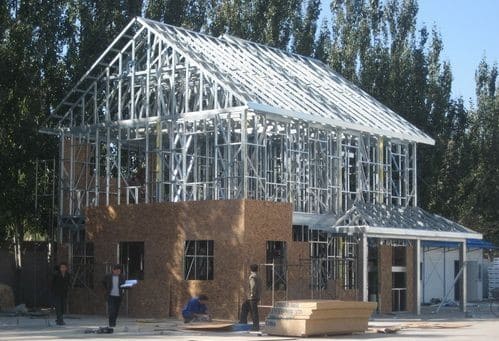
Steel Gauge Structural Capacity
Load-bearing capacity comparison for different steel thicknesses in external walls.
| Steel Gauge | Thickness (mm) | Max Vertical Load | Wind Resistance | Seismic Rating | Structural Use |
|---|---|---|---|---|---|
| 0.50mm | 0.50 | 150 kg/m | Poor | None | Non-structural only |
| 0.80mm | 0.80 | 300 kg/m | Fair | Limited | Interior partitions |
| 1.2mm | 1.20 | 800 kg/m | Good | Moderate | Residential load-bearing |
| 1.5mm | 1.50 | 1,200 kg/m | Very Good | Good | Commercial structures |
| 2.0mm | 2.00 | 1,800 kg/m | Excellent | Excellent | High-rise applications |
1.2mm minimum required for any load-bearing application.
Building Code Requirements
Structural steel requirements for external load-bearing walls by building type.
| Building Type | Minimum Gauge | Required Engineering | Code Compliance | Safety Factor |
|---|---|---|---|---|
| Single Story Residential | 1.2mm | Simplified design | Standard codes | 2.5:1 |
| Multi-story Residential | 1.5mm | Professional engineer | Enhanced codes | 3.0:1 |
| Commercial Low-rise | 1.5mm | Structural engineer | Commercial codes | 3.0:1 |
| Commercial High-rise | 2.0mm+ | Licensed engineer | Strict compliance | 3.5:1 |
| Industrial Buildings | 2.0mm+ | Specialized engineer | Industrial codes | 4.0:1 |
Professional engineering required for all load-bearing steel frame systems.
Load Analysis Requirements
Engineering considerations for external load-bearing wall design.
| Load Type | Design Factor | Steel Impact | Calculation Method | Code Reference |
|---|---|---|---|---|
| Dead Loads | 1.2 factor | Compression strength | Standard formulas | IBC Section 1607 |
| Live Loads | 1.6 factor | Combined stress | Engineering analysis | IBC Section 1608 |
| Wind Loads | 1.6 factor | Lateral resistance | Wind speed mapping | ASCE 7 Chapter 27 |
| Seismic Loads | Variable | Dynamic response | Seismic design | IBC Section 1613 |
| Snow Loads | 1.6 factor | Roof load transfer | Climate data | ASCE 7 Chapter 7 |
Combined load analysis determines minimum steel requirements.
What is the Spacing Requirement for Ceiling Hangers in Guyana Buildings?
Ceiling hanger spacing in Guyana buildings follows 1200mm maximum centers for main runners with 600mm spacing for cross tees, reduced to 900mm centers in high humidity areas or with heavy ceiling loads, following Caribbean building standards that account for tropical climate conditions, seismic considerations, and local construction practices.
Main runner hangers require maximum 1200mm spacing for standard ceiling systems with uniform load distribution. Cross tee connections occur at 600mm intervals providing structural grid stability. High humidity areas demand reduced spacing to 900mm centers preventing sag from moisture loading. Heavy ceiling installations with integrated lighting or HVAC require closer hanger spacing based on load calculations. Seismic zones may mandate additional hangers for lateral support and dynamic loading.
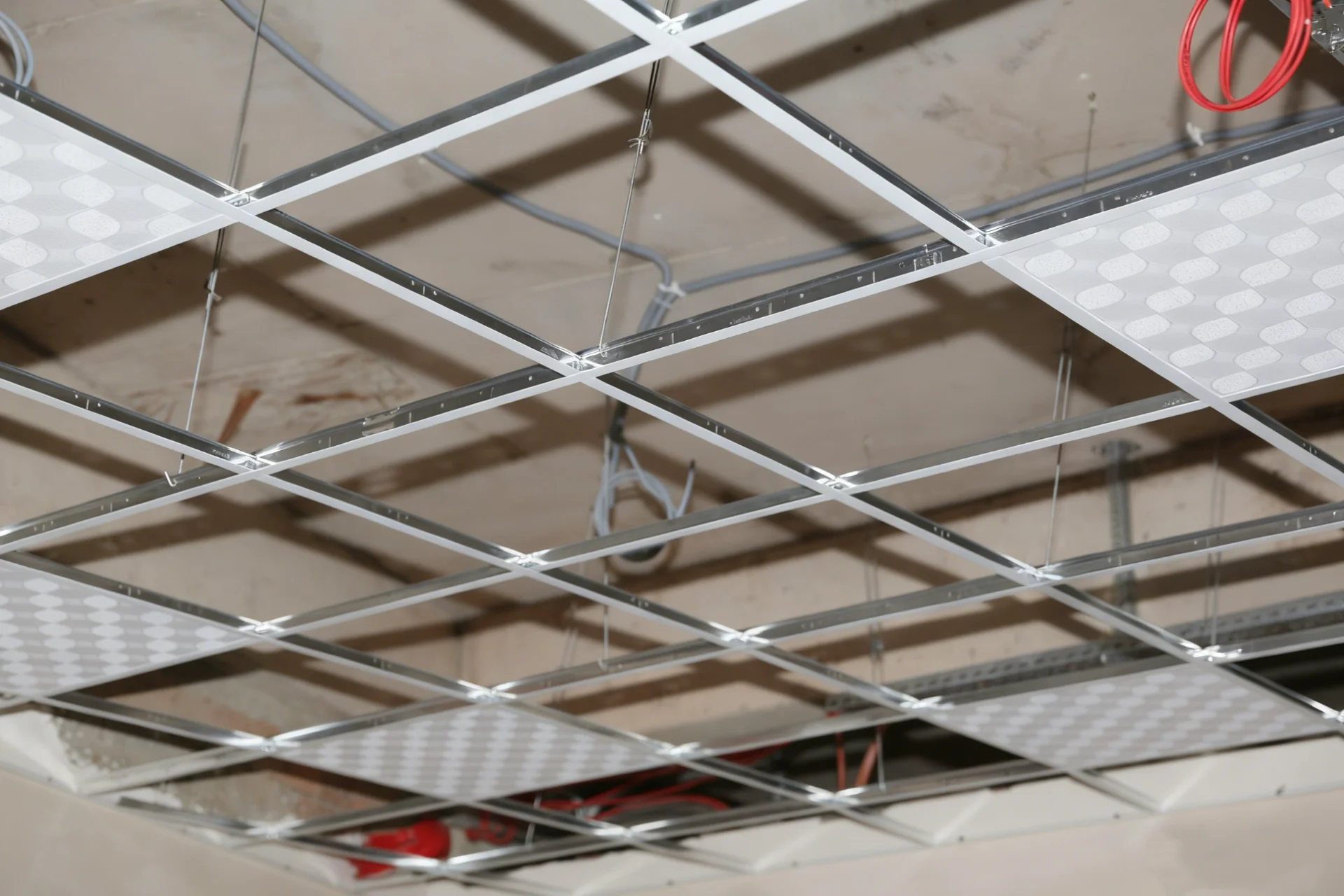
Standard Spacing Requirements
Ceiling hanger spacing specifications for different applications in tropical climates.
| Application Type | Main Runner Spacing | Cross Tee Spacing | Hanger Wire Gauge | Load Capacity |
|---|---|---|---|---|
| Standard Office | 1200mm | 600mm | 12 gauge | 25 kg/m² |
| High Humidity Areas | 900mm | 600mm | 12 gauge | 30 kg/m² |
| Heavy Ceiling Loads | 600mm | 600mm | 10 gauge | 40 kg/m² |
| Seismic Zones | 900mm | 450mm | 10 gauge | 35 kg/m² |
| Exterior Soffits | 600mm | 450mm | 10 gauge | 50 kg/m² |
High humidity applications require closer spacing for moisture resistance.
Load Calculation Factors
Factors affecting ceiling hanger spacing requirements in Guyana climate.
| Load Factor | Standard Impact | High Humidity Impact | Design Consideration | Safety Margin |
|---|---|---|---|---|
| Ceiling Tile Weight | 2-4 kg/m² | Same | Material selection | 3:1 ratio |
| Moisture Absorption | Minimal | +20-30% | Humidity resistance | 2.5:1 ratio |
| Integrated Systems | Variable | Same | Load distribution | 4:1 ratio |
| Wind Uplift | Moderate | Same | Coastal considerations | 2:1 ratio |
| Seismic Forces | Low-Moderate | Same | Dynamic loading | 3:1 ratio |
Moisture absorption significantly increases effective ceiling weight.
Installation Requirements
Critical installation factors for reliable ceiling hanger performance.
| Installation Aspect | Standard Practice | Tropical Requirement | Quality Control | Performance Impact |
|---|---|---|---|---|
| Hanger Attachment | Concrete anchors | Corrosion-resistant | Pull testing | Critical |
| Wire Selection | Galvanized steel | Stainless steel | Gauge verification | High |
| Connection Details | Standard clips | Sealed connections | Visual inspection | Moderate |
| Alignment Accuracy | ±6mm tolerance | ±3mm tolerance | Laser level | High |
| Safety Wiring | Every 4th hanger | Every 3rd hanger | Code compliance | Critical |
Corrosion-resistant materials essential for tropical environments.
Difference Between Black-Base and White-Base T-Grid Systems?
Black-base T-grid systems provide superior light absorption reducing glare and ceiling reflections with professional commercial appearance, while white-base systems maximize light reflection increasing overall illumination efficiency by 15-20% with cleaner aesthetic suitable for healthcare and educational facilities, both offering identical structural performance with color choice affecting visual comfort and energy efficiency.
Black-base T-grids feature matte black finish that absorbs light preventing unwanted reflections and glare reduction for comfortable visual environment. White-base systems utilize high-reflectance coating that bounces light back into occupied spaces improving illumination efficiency. Light absorption versus light reflection creates different spatial atmospheres affecting occupant comfort and energy consumption. Professional appearance of black systems suits corporate environments while white systems enhance brightness in institutional settings. Structural performance remains identical between color variants with same load capacity and installation methods.

Visual Performance Comparison
Light interaction and aesthetic differences between black and white T-grid systems.
| Performance Aspect | Black-Base T-Grid | White-Base T-Grid | Application Preference | Energy Impact |
|---|---|---|---|---|
| Light Reflection | 5-10% | 80-90% | Task-oriented spaces | High |
| Glare Reduction | Excellent | Moderate | Computer workstations | Medium |
| Visual Depth | Enhanced | Reduced | Dramatic interiors | Low |
| Brightness Enhancement | Minimal | Significant | General illumination | High |
| Professional Appearance | Corporate | Institutional | Design preference | None |
White-base systems provide significant energy savings through improved light utilization.
Application Suitability
Recommended applications for each T-grid color system based on space function.
| Space Type | Black-Base Preferred | White-Base Preferred | Primary Reason | Secondary Benefit |
|---|---|---|---|---|
| Corporate Offices | Yes | No | Professional appearance | Glare reduction |
| Healthcare Facilities | No | Yes | Hygiene appearance | Light reflection |
| Educational Buildings | No | Yes | Brightness enhancement | Energy efficiency |
| Retail Spaces | Variable | Yes | Merchandise visibility | Light amplification |
| Industrial Facilities | Yes | Variable | Durability focus | Maintenance ease |
Space function determines optimal color choice for performance.
Light Efficiency Analysis
Quantitative analysis of lighting performance differences between T-grid colors.
| Lighting Metric | Black-Base Performance | White-Base Performance | Improvement Factor | Cost Impact |
|---|---|---|---|---|
| Light Output | Baseline | +15-20% increase | 1.2x multiplier | Lower fixture count |
| Energy Consumption | Standard | 10-15% reduction | 0.9x factor | Utility savings |
| Lamp Life | Standard | Extended | 1.1x lifespan | Maintenance reduction |
| Uniformity Ratio | Good | Excellent | Better distribution | Visual comfort |
| Glare Index | Low | Moderate | Trade-off | Task suitability |
White-base systems deliver measurable energy benefits through enhanced light distribution.
Maintenance Considerations
Long-term performance and maintenance differences between T-grid color systems.
| Maintenance Aspect | Black-Base System | White-Base System | Maintenance Impact | Cost Factor |
|---|---|---|---|---|
| Dirt Visibility | Low | High | More frequent cleaning | Higher labor |
| Color Stability | Excellent | Good | UV degradation | Replacement timing |
| Touch-up Requirements | Minimal | Moderate | Damage visibility | Material costs |
| Cleaning Frequency | Annual | Semi-annual | Visual standards | Service costs |
| Replacement Matching | Easy | Moderate | Color consistency | Inventory management |
Black-base systems require less frequent maintenance but white systems provide better performance.
Conclusion
Standard C-stud thickness for high-rise partitions is 0.80-1.2mm gauge steel with 0.80mm suitable for partitions up to 4.5m height, 1.0mm for 4.5-6m heights, and 1.2mm for structural applications or seismic zones. 0.50mm gauge steel cannot be used for external load-bearing walls due to insufficient structural capacity with minimum 1.2-2.0mm thickness required for load-bearing applications based on building height and engineering requirements. Ceiling hanger spacing in Guyana buildings follows 1200mm maximum centers for main runners with 600mm cross tee spacing, reduced to 900mm centers in high humidity areas following Caribbean building standards. Black-base T-grid systems provide superior light absorption and glare reduction with professional appearance while white-base systems maximize light reflection increasing illumination efficiency by 15-20% with identical structural performance. Success with light gauge steel systems requires understanding that stud thickness directly correlates with structural capacity and deflection resistance, load-bearing applications demand engineered calculations and appropriate gauge selection, tropical climates require adjusted spacing and corrosion-resistant materials for ceiling systems, and T-grid color selection affects both visual comfort and energy efficiency with measurable performance differences, making proper specification critical for achieving optimal structural performance and occupant comfort in building projects.