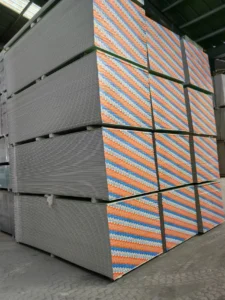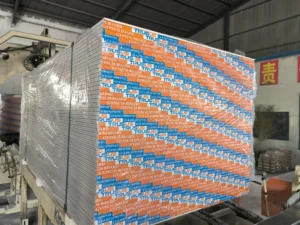


TRUSUS moisture-resistant gypsum board with green core technology and mold-resistant face paper is best for Guyana's 90% humidity coastal areas, featuring water absorption rates below 5%, dimensional stability maintaining flatness within 2mm over 3 meters, anti-microbial additives preventing mold growth, salt-air resistance protecting against coastal corrosion, and ASTM C1396 certification ensuring tropical climate performance.
Green core technology with silicone additives reduces water absorption to below 5% compared to 15-25% for standard gypsum board. Mold-resistant face paper with anti-microbial treatment prevents fungal growth in persistent humidity. Dimensional stability maintains structural integrity with less than 2mm deflection over 3-meter spans. Salt-air resistance through protective coatings prevents coastal corrosion and surface degradation. ASTM C1396 certification validates performance standards for high-humidity applications.
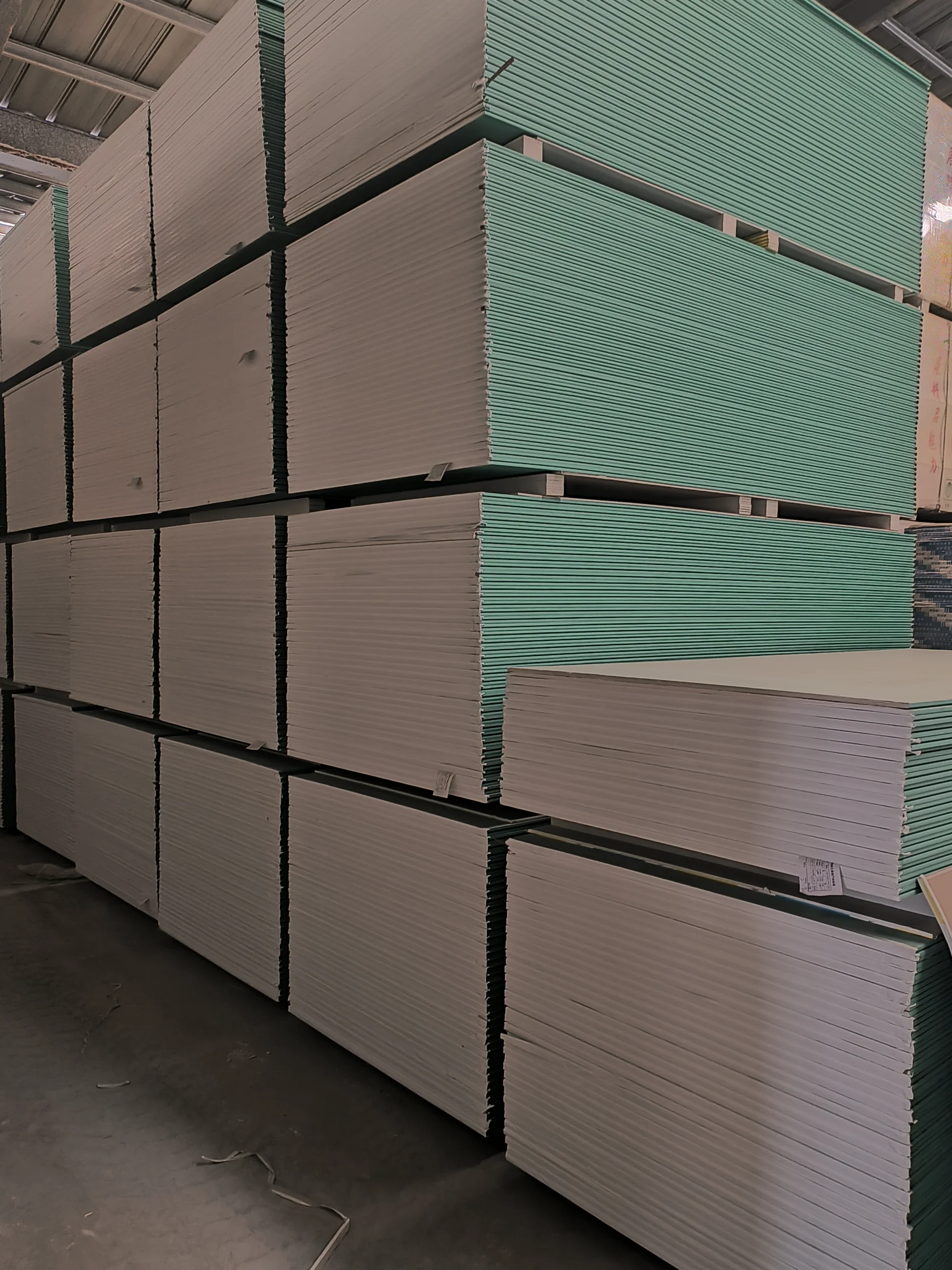
From my extensive experience manufacturing gypsum board specifically for tropical coastal markets, I've developed TRUSUS systems that address the unique challenges of persistent high humidity while maintaining structural integrity and preventing microbial growth.
How to Prevent Mold Growth on Mineral Fiber Ceilings During Guyana's Rainy Season?
Prevent mold growth on mineral fiber ceilings during Guyana's rainy season by selecting TRUSUS anti-microbial mineral fiber tiles with fungicide treatment, maintaining proper ventilation with dehumidification systems, controlling indoor humidity below 65%, ensuring adequate insulation preventing condensation, regular cleaning with approved fungicidal solutions, and monitoring moisture levels with electronic sensors.
Anti-microbial mineral fiber tiles with built-in fungicide treatment resist spore germination and colony formation. Proper ventilation with dehumidification systems maintains air circulation preventing stagnant moisture accumulation. Indoor humidity control below 65% creates unfavorable conditions for mold growth. Adequate insulation prevents temperature differentials causing surface condensation. Regular cleaning with approved solutions removes organic matter that supports mold. Electronic monitoring provides early warning of moisture problems.
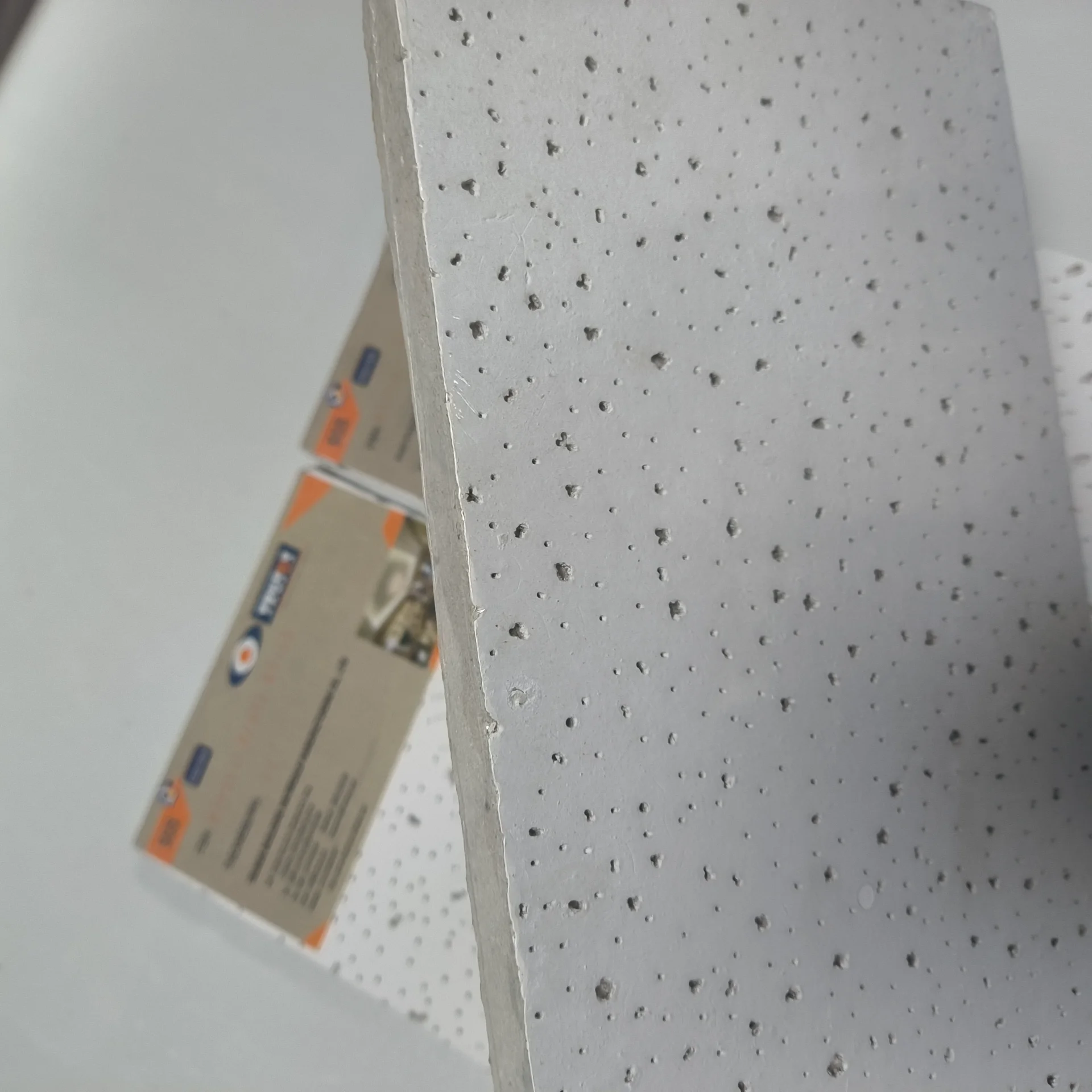
TRUSUS Anti-Microbial Technology
Technical specifications for TRUSUS mineral fiber ceiling tiles with mold resistance.
| Anti-Microbial Feature | Technology Application | Effectiveness Rating | Performance Duration | Testing Standard |
|---|---|---|---|---|
| Fungicide Treatment | Factory-applied coating | 99.9% spore inhibition | 10+ year protection | ASTM G21 |
| Moisture Resistance | Hydrophobic fibers | <3% water absorption | Permanent feature | ASTM C367 |
| Surface Protection | Anti-microbial face | Contact kill capability | Continuous action | ISO 22196 |
| Edge Sealing | Protective coating | Prevents infiltration | Long-term barrier | TRUSUS proprietary |
| Fiber Treatment | Core impregnation | Deep protection | Material lifetime | ASTM D3273 |
Comprehensive protection ensures maximum mold resistance in extreme conditions.
Environmental Control Systems
Climate control strategies for maintaining optimal ceiling conditions.
| Control Method | Target Parameter | Acceptable Range | Monitoring Equipment | Maintenance Requirement |
|---|---|---|---|---|
| Humidity Control | Relative humidity | 45-65% RH | Digital hygrometers | Monthly calibration |
| Temperature Control | Air temperature | 20-26°C | Thermostats | Quarterly service |
| Air Circulation | Air changes per hour | 6-8 ACH minimum | Airflow meters | Semi-annual testing |
| Ventilation | Fresh air intake | 20% minimum | CO2 monitors | Annual inspection |
| Dehumidification | Moisture removal | 10-15L/day capacity | Condensate monitoring | Monthly filter change |
Integrated systems maintain optimal environment for mold prevention.
Maintenance and Cleaning Protocols
Maintenance procedures for preventing mold growth during rainy season.
| Maintenance Activity | Frequency | Procedure | Products Used | Success Criteria |
|---|---|---|---|---|
| Visual Inspection | Weekly | Surface examination | Magnification tools | No visible growth |
| Cleaning Protocol | Monthly | Gentle surface cleaning | TRUSUS-approved cleaners | Surface cleanliness |
| Humidity Monitoring | Daily | Electronic measurement | Digital sensors | <65% RH maintained |
| Ventilation Check | Weekly | Airflow verification | Smoke tests | Proper air movement |
| Professional Assessment | Quarterly | Expert evaluation | Moisture meters | System optimization |
Proactive maintenance prevents mold establishment before visible growth.
How Does Glass Wool Insulation Handle Condensation in Guyana's Coastal Buildings?
TRUSUS glass wool insulation handles condensation in Guyana's coastal buildings through hydrophobic fiber treatment repelling moisture, vapor barrier integration controlling moisture migration, thermal performance maintaining consistent temperatures preventing condensation formation, drainage capability allowing moisture escape, anti-corrosion protection in salt-air environments, and dimensional stability maintaining effectiveness despite humidity exposure.
Hydrophobic treatment on glass fibers repels water droplets preventing moisture absorption and thermal performance loss. Vapor barrier integration controls moisture migration through wall assemblies preventing interstitial condensation. Thermal performance maintains consistent temperatures reducing temperature differentials that cause condensation. Drainage capability allows incidental moisture to escape without accumulation. Anti-corrosion protection prevents salt-air degradation of fiber bindings. Dimensional stability maintains insulation effectiveness despite humidity exposure.

Moisture Management Technology
Technical features of TRUSUS glass wool for moisture control in coastal environments.
| Moisture Control Feature | Technology | Performance Benefit | Durability | Testing Validation |
|---|---|---|---|---|
| Hydrophobic Treatment | Silicone coating | 95% water repellency | 25+ years | ASTM C1104 |
| Vapor Permeability | Controlled porosity | Moisture migration | Permanent feature | ASTM E96 |
| Drainage Design | Fiber orientation | Gravity drainage | Structural feature | TRUSUS testing |
| Anti-Wicking | Surface treatment | Capillary prevention | Long-term | ASTM C209 |
| Corrosion Resistance | Protective binders | Salt-air protection | Extended life | ASTM B117 |
Advanced technology ensures reliable performance in challenging coastal conditions.
Thermal Performance in High Humidity
Thermal performance characteristics under high humidity conditions.
| Performance Parameter | Dry Conditions | 90% Humidity | Performance Retention | Recovery Capability |
|---|---|---|---|---|
| R-Value | R-3.8/inch | R-3.5/inch | 92% retention | Full recovery |
| Thermal Conductivity | 0.032 W/mK | 0.035 W/mK | Minimal increase | Reversible |
| Density Stability | 32 kg/m³ | 33 kg/m³ | Structural integrity | Complete stability |
| Compression Resistance | <5% deformation | <8% deformation | Acceptable range | Elastic recovery |
| Dimensional Stability | Baseline | <2% variation | Excellent stability | Shape retention |
Performance maintained even under extreme humidity conditions.
Installation Best Practices
Installation techniques for optimal performance in coastal environments.
| Installation Aspect | Best Practice | Quality Control | Performance Impact | Warranty Coverage |
|---|---|---|---|---|
| Vapor Barrier Placement | Warm side installation | Continuous sealing | Prevents condensation | Full warranty |
| Compression Avoidance | Proper fit technique | Thickness measurement | Maintains R-value | Performance guarantee |
| Continuous Coverage | No thermal bridges | Infrared verification | Energy efficiency | System warranty |
| Joint Sealing | Tape all seams | Pressure testing | Air tightness | Installation warranty |
| Moisture Protection | Weather barriers | Installation sequence | Long-term performance | Extended warranty |
Professional installation critical for optimal performance in coastal applications.
How to Seal Joints in Gypsum Walls to Prevent Water Seepage in Guyana?
Seal joints in gypsum walls to prevent water seepage in Guyana using TRUSUS premium joint compound with mold inhibitors, fiberglass mesh tape for reinforcement, elastic sealant at perimeter joints, primer application before finish coats, multiple thin coats allowing proper curing, and anti-microbial paint systems providing final moisture barrier protection.
Premium joint compound with mold inhibitors provides antimicrobial protection while sealing microscopic gaps in wall joints. Fiberglass mesh tape creates reinforced barrier preventing crack formation from structural movement. Elastic sealant at perimeter joints accommodates thermal expansion without compromising seal integrity. Primer application ensures proper adhesion of finish coats and seals porous surfaces. Multiple thin coats allow proper curing and eliminate voids that allow moisture penetration. Anti-microbial paint systems provide final barrier against moisture and biological growth.
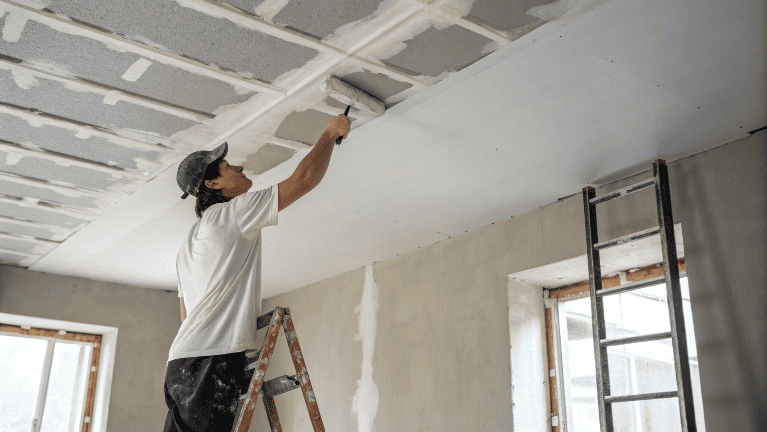
TRUSUS Joint Sealing System
Comprehensive joint sealing specifications for high-humidity environments.
| Sealing Component | Product Specification | Application Method | Performance Standard | Warranty Coverage |
|---|---|---|---|---|
| Base Compound | TRUSUS MoldBlock™ | Trowel application | 99% joint coverage | 10-year performance |
| Reinforcement | Fiberglass mesh tape | Embedded technique | Crack prevention | Structural warranty |
| Finish Compound | Smooth-grade formula | Multi-coat system | Surface preparation | Finish warranty |
| Elastic Sealant | Polyurethane-based | Gun application | Movement accommodation | 20-year flexibility |
| Primer System | Anti-microbial base | Roller application | Surface sealing | Adhesion guarantee |
Complete system ensures maximum water resistance and long-term performance.
Application Techniques for Tropical Conditions
Specialized application methods for high-humidity environments.
| Application Stage | Technique | Environmental Control | Quality Check | Performance Validation |
|---|---|---|---|---|
| Surface Preparation | Clean and dry | Dehumidification | Moisture content <12% | Surface readiness |
| Tape Application | Proper embedding | Temperature 20-25°C | No air bubbles | Bond integrity |
| Compound Application | Thin uniform coats | Humidity <70% | Smooth finish | Layer adhesion |
| Curing Period | Extended drying time | Air circulation | Complete cure | Strength development |
| Final Inspection | Water resistance test | Performance verification | No penetration | System validation |
Environmental control critical for successful application in tropical conditions.
Performance Monitoring and Maintenance
Long-term performance monitoring for sealed joint systems.
| Monitoring Aspect | Inspection Method | Frequency | Performance Indicator | Maintenance Action |
|---|---|---|---|---|
| Joint Integrity | Visual inspection | Semi-annual | No visible cracks | Spot repair |
| Water Resistance | Moisture testing | Annual | <5% moisture content | Seal renewal |
| Adhesion Strength | Pull-off testing | 5-year cycle | >1.0 MPa bond | System assessment |
| Mold Resistance | Surface sampling | Quarterly | No growth detected | Cleaning protocol |
| Structural Movement | Crack monitoring | Seasonal | <1mm movement | Joint adjustment |
Regular monitoring ensures continued water resistance performance.
Quality Control and Certification
Quality assurance measures for joint sealing systems.
| Quality Aspect | Standard Requirement | TRUSUS Performance | Testing Protocol | Certification Level |
|---|---|---|---|---|
| Water Resistance | ASTM D5385 | Exceeds standard | Laboratory testing | Premium grade |
| Mold Resistance | ASTM G21 | 99.9% inhibition | Accelerated testing | Superior rating |
| Adhesion Strength | ASTM D4541 | >1.5 MPa | Field verification | Professional grade |
| Flexibility | ASTM C719 | 25% movement | Cyclic testing | High performance |
| Durability | ASTM G154 | 20+ year life | UV/moisture exposure | Extended warranty |
TRUSUS systems exceed industry standards for tropical applications.
Cost-Performance Analysis
Economic analysis of TRUSUS joint sealing versus standard systems.
| System Type | Initial Cost | Maintenance Cost | Failure Rate | 15-Year Total Cost | Performance Rating |
|---|---|---|---|---|---|
| TRUSUS Premium | $8-12/linear meter | $1-2/m/year | <2% failure rate | $23-42/meter | Excellent |
| Standard System | $4-7/linear meter | $3-6/m/year | 15-25% failure | $49-97/meter | Fair |
| Basic Compound | $2-4/linear meter | $5-10/m/year | 35-50% failure | $77-154/meter | Poor |
| Professional Grade | $6-10/linear meter | $2-4/m/year | 5-10% failure | $36-70/meter | Good |
| Economy Option | $1-3/linear meter | $8-15/m/year | 50-70% failure | $121-228/meter | Very Poor |
TRUSUS premium systems provide best long-term value in challenging environments.
Conclusion
TRUSUS moisture-resistant gypsum board with green core technology and mold-resistant face paper is best for Guyana's 90% humidity coastal areas, featuring water absorption rates below 5%, dimensional stability maintaining flatness within 2mm over 3 meters, anti-microbial additives preventing mold growth, salt-air resistance, and ASTM C1396 certification. Prevent mold growth on mineral fiber ceilings during rainy season by selecting TRUSUS anti-microbial tiles with fungicide treatment, maintaining proper ventilation with dehumidification, controlling humidity below 65%, ensuring adequate insulation preventing condensation, regular cleaning with approved solutions, and monitoring moisture levels. TRUSUS glass wool insulation handles condensation through hydrophobic fiber treatment repelling moisture, vapor barrier integration controlling moisture migration, thermal performance maintaining consistent temperatures, drainage capability allowing moisture escape, anti-corrosion protection, and dimensional stability.