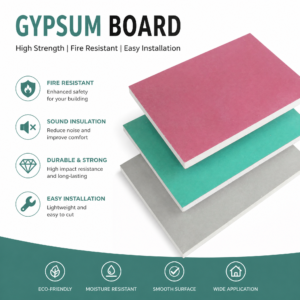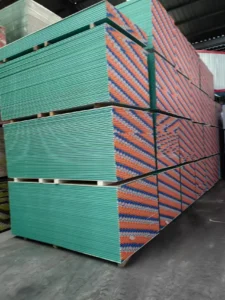


Choosing the right material for your interior walls can feel overwhelming. A poor choice might compromise safety or aesthetics. Let me show you why gypsum board is the trusted solution for most projects.
Gypsum board, often called drywall, is the foundation of modern interiors due to its unmatched combination of fire resistance1, versatility2, and cost-effectiveness3. It provides a consistent, smooth surface for walls and ceilings, making it easy to install and ideal for nearly any design.
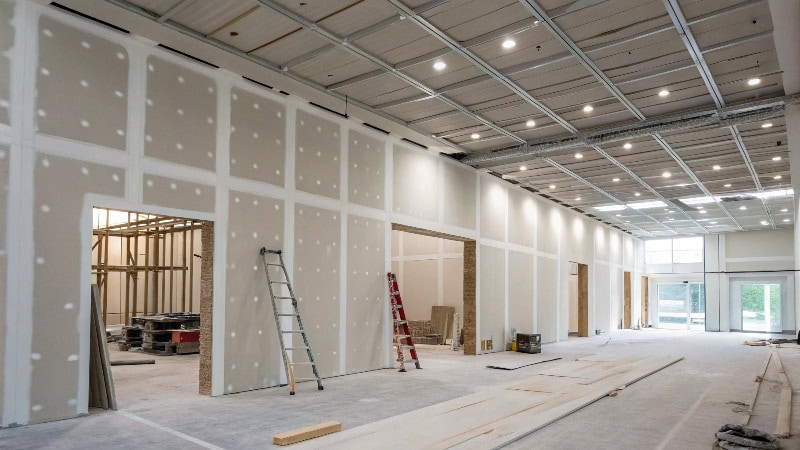
When I first started in this industry, I was amazed by how one material could be used in so many different ways, from simple homes to large commercial buildings. It's a true workhorse. But what exactly is it that makes this simple panel so essential for builders and engineers like you? Let's break it down together, and I'll share what I've learned over the years.
What Exactly Is Gypsum Board?
You see "drywall" in every building, but do you know what it's made of? Not understanding its basic makeup means you might miss out on appreciating its simple genius. Let me explain.
Gypsum board is a panel with a core made from gypsum plaster4, which is then pressed between two thick sheets of paper. This simple construction is what gives the material its strength, smooth finish5, and fire-resistant properties, making it a cornerstone of interior building.
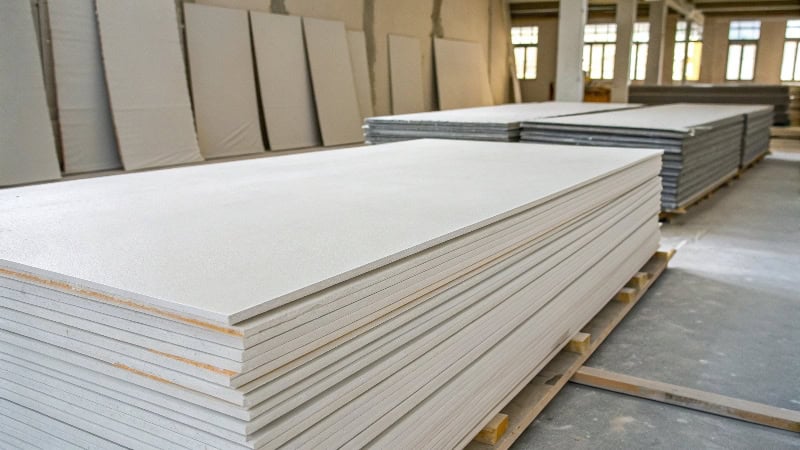
When I was first learning in the factory, I saw how these raw materials—gypsum and paper—were combined to create something incredibly strong and reliable. It’s a beautifully simple process for such a high-performance product. The technical definition, as per the ASTM C11 standard, classifies it as a gypsum panel product, but its power lies in how these components work together. For an engineer like Marcin, understanding the function of each part is key to selecting the right material.
Here’s a simple breakdown of the components:
| Component | Primary Function | Key Benefit for Construction |
|---|---|---|
| Gypsum Core | Provides fire resistance1 and structural mass. | Enhances safety and provides sound insulation6. |
| Paper Facing | Creates a smooth, paintable surface and provides tension. | Ensures a high-quality finish and durability. |
This core design is what makes gypsum board much faster and cleaner to install than old-school lath and plaster, completely changing how we build interiors.
Why Is Gypsum Board the Premier Choice for Walls and Ceilings?
You need a material that is safe, versatile, and economical. Choosing the wrong product can lead to project delays and budget overruns. I’ve seen this happen, and it’s why I almost always recommend starting with gypsum board.
Gypsum board is the premier choice because it excels in four key areas: fire resistance1, versatility2, installation speed7, and cost-effectiveness3. This balance makes it the most practical and reliable option for creating walls, ceilings, and partition systems in modern construction.
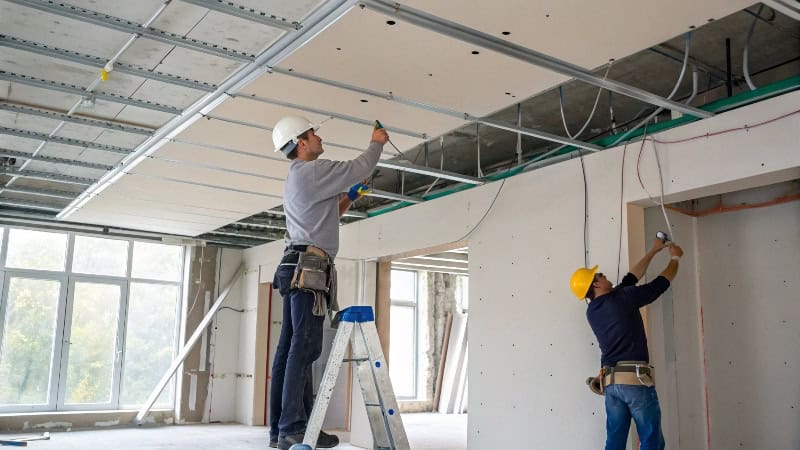
Its most celebrated feature is fire resistance1. The gypsum core contains chemically combined water (CaSO₄·2H₂O) that, when heated, is released as steam. This process, called calcination8, effectively slows heat transfer and helps contain fire. That’s why building codes often require it for safety. But its benefits go far beyond that. I’ve helped clients use it for everything from basic room dividers to complex, soundproofed commercial spaces9. For an engineer concerned with performance, knowing these properties is crucial.
Let’s compare its benefits in a more structured way:
| Feature | Performance Benefit | Impact on Projects |
|---|---|---|
| Fire Resistance | Natural ability to slow fire spread due to water in the gypsum core. | Improves building safety and helps meet building codes. |
| Versatility | Can be used for walls, ceilings, and partitions in any type of building. | Offers a single-material solution for many applications. |
| Sound Control | The dense core helps to block airborne sound between rooms. | Creates quieter, more comfortable interior spaces. |
| Economic & Convenient | Lower material and labor costs compared to plaster; faster and cleaner installation. | Reduces project timelines and overall construction costs. |
These qualities make it a smart, dependable choice that delivers consistent results every time.
What Are the Main Types of Gypsum Board?
Walking into a supplier's warehouse, you'll see different types of gypsum board. Choosing incorrectly can mean you fail an inspection or your wall doesn't perform as needed. It's a mistake I've seen people make, costing them time and money.
The main types are Regular and Type X gypsum board10. Regular is for general use in walls and ceilings, while Type X has a specially formulated core with glass fibers for enhanced fire resistance1, required for fire-rated building assemblies.
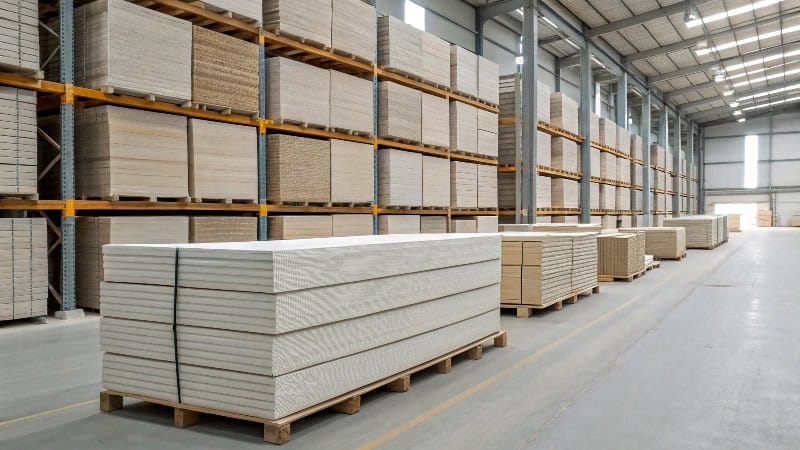
Over the years, I've had to explain this difference to many clients. Think of Regular as your everyday workhorse, perfect for most residential projects. It's affordable and does a great job. But for situations where fire safety is paramount—like in apartment buildings, commercial corridors, or multi-family homes—Type X is non-negotiable. Building codes are very specific about where it must be used. For an engineer like Marcin, selecting the right type is a critical part of the job, ensuring the structure is both safe and compliant.
Here's a table to help you decide which one you need:
| Gypsum Board Type | Key Characteristic | Common Applications | Why You'd Choose It |
|---|---|---|---|
| Regular Gypsum Board11 | Standard gypsum core with paper facing. | Residential walls, ceilings, light commercial spaces. | For general-purpose construction on a standard budget. |
| Type X Gypsum Board | Denser core with glass fiber reinforcement. | Fire-rated assemblies in commercial and residential buildings. | When building codes require a specific fire-resistance rating (e.g., 1-hour). |
It’s also worth noting there are other specialty panels in the gypsum family, such as moisture-resistant (green board)12, abuse-resistant13, and glass mat panels14, each designed for specific environmental challenges.
Conclusion
Gypsum board's blend of safety, versatility2, and efficiency makes it the undisputed champion for modern interiors. Knowing its properties ensures your project's success and durability.
1、Learn how fire resistance works in construction materials to improve safety and meet building code requirements. ↩
2、Discover how versatile materials can adapt to various design and functional needs, saving time and resources. ↩
3、Understand how to balance quality and budget when selecting materials for your project. ↩
4、Explore the properties and uses of gypsum plaster to see why it’s a core component in modern interiors. ↩
5、Find techniques and materials that ensure a flawless wall surface for painting or decorating. ↩
6、Learn which materials can help create quieter, more comfortable indoor spaces. ↩
7、Discover methods and materials that can significantly reduce installation time without compromising quality. ↩
8、Understand the science behind calcination and its role in fire resistance for safer buildings. ↩
9、Get insights into creating effective soundproofing solutions for offices, studios, and other commercial environments. ↩
10、Understand the enhanced fire-resistant properties of Type X gypsum board and its role in meeting building codes. ↩
11、Learn where and why Regular Gypsum Board is the go-to choice for many residential and light commercial projects. ↩
12、Find out how green board protects against moisture damage in bathrooms, kitchens, and other damp areas. ↩
13、Learn how abuse-resistant panels can withstand high-traffic wear and tear in commercial and institutional settings. ↩
14、Discover the durability and moisture resistance of glass mat panels for challenging environments. ↩